




Lamborghini vs Ferrari: A Definitive Rivalry History in Modern Terms
For decades, the automotive world has been captivated by a rivalry that transcends mere competition. It is a story of raw emotion, technical prowess, and a history rooted in pride. When we discuss Lamborghini vs Ferrari, we are not merely comparing two exotic car brands; we are examining a fundamental clash of automotive philosophies. This enduring conflict, forged in the heat of personal pride and fueled by relentless innovation, has shaped the supercar landscape forever. From the scorched asphalt of the race track to the hushed salons of the ultra-wealthy, this is a narrative of man versus man, machine versus machine, and a legendary supercar rivalry that defines the modern era of high performance.
This comparison delves into the history of this iconic feud, exploring how Ferruccio Lamborghini’s bold challenge to Enzo Ferrari led to one of the most enduring legacies in automotive history. We will examine the key models that defined this battle, the design philosophies that set them apart, and the technological arms race that continues to push the boundaries of what’s possible. Understanding the Lamborghini vs Ferrari dynamic is crucial for anyone who appreciates automotive engineering, design, and the enduring power of human rivalry.
The Genesis of a Legendary Feud
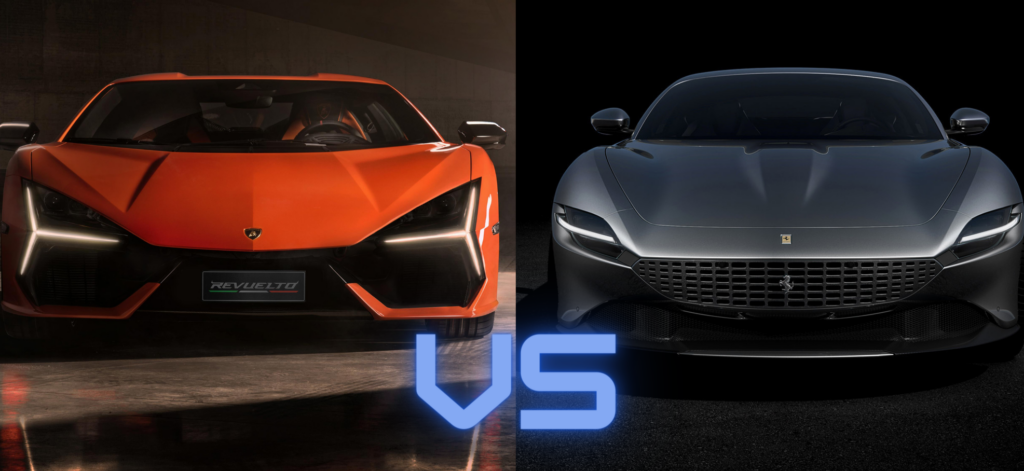
The story of Lamborghini vs Ferrari is a classic tale of an underdog taking on the establishment. It all began in the early 1960s when Ferruccio Lamborghini, a successful industrialist and owner of a fleet of Italian sports cars, found himself dissatisfied with the products of the renowned Maranello-based manufacturer. Lamborghini, known for his meticulous standards and engineering background in tractor manufacturing, had several grievances. His primary complaint involved the Ferrari clutch, which was prone to failure under the strain of high-performance driving.
Rather than accepting these mechanical shortcomings, Ferruccio decided to approach Enzo Ferrari directly to voice his concerns. However, the meeting did not go as planned. Enzo Ferrari, a man known for his unwavering pride and demanding nature, allegedly dismissed Ferruccio’s complaints, remarking that a man who drives tractors would never understand the intricacies of racing cars. This statement was not only dismissive but deeply insulting to Lamborghini’s mechanical expertise and ego.
In that moment, the gauntlet was thrown. Ferruccio Lamborghini realized that if Enzo Ferrari was unwilling to listen to his mechanical criticisms, he would have to build his own supercar to prove that he could do it better. This was not merely about creating a faster or more luxurious car; it was about challenging the king of the Italian automotive industry on his own turf. It was a personal vendetta, a challenge of ego, and the birth of a rivalry that would forever change the automotive world.
The establishment of Automobili Lamborghini in 1963 was a bold move. Ferruccio sought to create a machine that not only competed with Ferrari in terms of speed and performance but also exceeded it in terms of comfort, build quality, and daily usability. He believed that Ferrari’s focus on racing had led to a lack of refinement in its road cars. Lamborghini’s vision was to create a luxury performance car that combined the thrill of a race-bred machine with the comfort of a grand tourer.
The First Strike: Miura vs Daytona
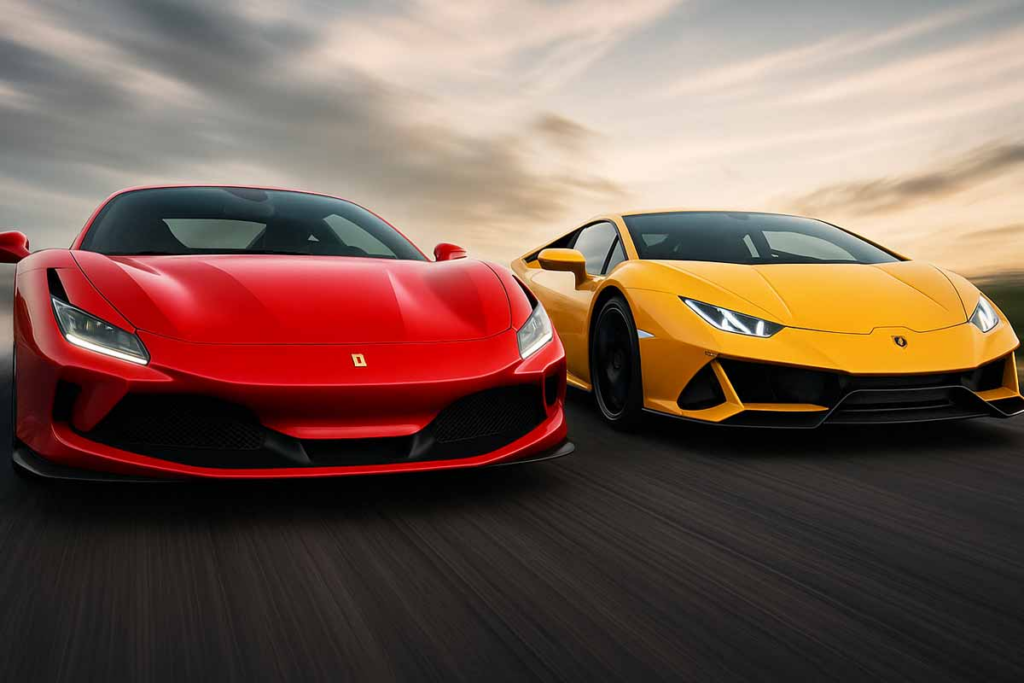
The Lamborghini vs Ferrari rivalry officially exploded onto the global stage in the mid-1960s with the introduction of two iconic vehicles that fundamentally altered the definition of a supercar. These were not just new models; they were paradigm shifts in automotive engineering and design.
First came the Lamborghini Miura, unveiled in 1966. This vehicle was revolutionary in every sense of the word. It was low, wide, and featured a transverse mid-engine layout—a configuration previously reserved almost exclusively for racing cars. The Miura was visually stunning, with sleek, flowing lines that belied its mechanical complexity. Its 4.0-liter V12 engine, positioned behind the cockpit, delivered a visceral driving experience unlike anything seen before. The Miura was more than just a fast car; it was a rolling statement of intent. It demonstrated that Lamborghini was not just entering the market; it was here to disrupt it. The production run of the Miura was limited to just over 760 units, making it one of the rarest and most valuable automobiles in the world today.
Ferrari’s response was the 365 GTB/4, better known as the Daytona, introduced in 1969. While the Daytona was undoubtedly a performance car of exceptional quality, it represented a more traditional approach to sports car engineering. It featured a front-mounted V12 engine and a more conventional silhouette. Ferrari’s commitment to racing heritage was evident in every curve and line of the Daytona, a powerful machine that showcased the company’s pedigree. However, compared to the radical innovation of the Miura, the Daytona felt somewhat conservative.
The impact of the Miura cannot be overstated. It set the standard for the modern supercar with its mid-engine configuration and radical design. It proved that a road car could be as thrilling and visually striking as a race car. The Miura challenged Ferrari’s dominance by offering a unique blend of raw performance and avant-garde styling, firmly establishing the Lamborghini vs Ferrari rivalry in the minds of enthusiasts worldwide.
A Clash of Design Ideologies
The Lamborghini vs Ferrari rivalry is not just about speed; it is a fundamental conflict of aesthetic principles. The two brands embody distinct design philosophies that cater to different notions of beauty, performance, and exclusivity.
Lamborghini has always been associated with bold, aggressive, and angular design. From the iconic Countach to the Aventador and the Huracán, Lamborghini’s vehicles are designed to shock and awe. Their signature angular lines, sharp creases, and dramatic proportions are meant to demand attention. Lamborghini’s design language is often described as futuristic, rebellious, and unapologetically flamboyant. These cars are designed to be noticed, to spark conversations, and to defy convention. This avant-garde approach reflects Ferruccio Lamborghini’s rebellious spirit and his desire to challenge the status quo. The visual impact of a Lamborghini is designed to be visceral and immediate—a pure expression of unbridled power and raw emotion.
Ferrari, on the other hand, leans towards flowing lines, aerodynamic elegance, and restrained aggression. From the classic 288 GTO to the F8 Tributo, Ferrari’s design is a masterclass in sculpted beauty. Ferrari’s vehicles exude an air of sophistication and refinement, combining aggressive performance with timeless elegance. The design language is deeply rooted in Ferrari’s racing heritage, with every curve serving a purpose in terms of aerodynamics and performance. Ferrari’s cars are often described as graceful, sensual, and sophisticated—machines that ooze Italian passion and craftsmanship. While they are undoubtedly powerful performance cars, they prioritize a refined aesthetic that speaks to a discerning taste.
This contrast in design represents a fundamental difference in the brands’ supercar philosophies. Lamborghini is the showman, the extrovert who demands attention with its wild design and radical performance. Ferrari is the silent assassin, the predatory machine that excels with precision, grace, and refined engineering. While both brands produce fast cars, they appeal to different sensibilities. Lamborghini caters to those who want to make a statement, while Ferrari appeals to those who appreciate the art of performance. The Lamborghini vs Ferrari design debate is a reflection of these differing ideologies, a timeless clash between raw power and refined elegance.
The Track vs The Street: A Duality of Purpose
While both Lamborghini and Ferrari are renowned for producing fast cars, their core priorities have traditionally been distinct, creating a fascinating dynamic in the supercar rivalry. Historically, Ferrari has been the undisputed king of the race track. The company was founded with racing at its core, and the DNA of Formula 1 is embedded in every Ferrari sports car. Enzo Ferrari’s vision was always to win races, and every car produced in Maranello has been designed with that goal in mind. This legacy is evident in Ferrari’s motorsport successes and its commitment to pushing the boundaries of race car technology.
Lamborghini, in contrast, has always focused on producing luxury performance street cars. While the company has dabbled in racing, its primary focus has been on creating road-legal machines that deliver breathtaking performance, cutting-edge technology, and exotic design. The Lamborghini identity is rooted in delivering an exhilarating driving experience for the road, offering a level of excitement and drama that other Italian sports cars cannot match.
This fundamental difference has resulted in a natural division of territory. Ferrari dominates the track, while Lamborghini rules the streets. Enthusiasts often choose between the two based on their primary focus—track days and motorsport heritage versus daily driving and extravagant style. However, the lines between these two domains have become increasingly blurred in recent years. Ferrari has been developing more accessible track-focused cars, while Lamborghini has been producing more luxurious and versatile performance cars.
The Lamborghini vs Ferrari rivalry has evolved over time, with both brands borrowing elements from each other to appeal to a wider audience. Yet, the fundamental distinction remains: Ferrari represents the pinnacle of racing engineering, while Lamborghini represents the ultimate expression of supercar passion. Understanding this duality is crucial for appreciating the Lamborghini vs Ferrari dynamic and the rich history of this iconic rivalry.
The Technological Arms Race: Innovation and Exclusivity
The Lamborghini vs Ferrari rivalry has always been a technological arms race, with both brands pushing the boundaries of what a