




Lamborghini vs. Ferrari: A Tale of Two Titans and a Rivalry That Redefined the Supercar
The automotive world has long been defined by legendary rivalries, but few carry the weight, the history, and the sheer spectacle of the battle between Lamborghini and Ferrari. More than just a comparison of high-performance automobiles, this is a clash of ideologies, a duel of ego, and a defining moment in the evolution of the supercar. For enthusiasts, this isn’t merely a comparison between two brands; it’s a war of titans that shaped the very definition of desire, power, and ultimate automotive engineering.
In the high-stakes arena of hypercars, where precision meets passion and tradition clashes with innovation, the rivalry between these Italian powerhouses has created a legacy that transcends performance metrics and brand loyalty. It is a narrative driven by engineering genius, relentless ambition, and a unique cultural tension that has fueled the evolution of automotive technology for decades. Understanding this rivalry isn’t just about appreciating fast cars; it’s about grasping the essence of what drives human ambition to reach the pinnacle of speed, style, and technological excellence.
The Spark: When Pride Met Power
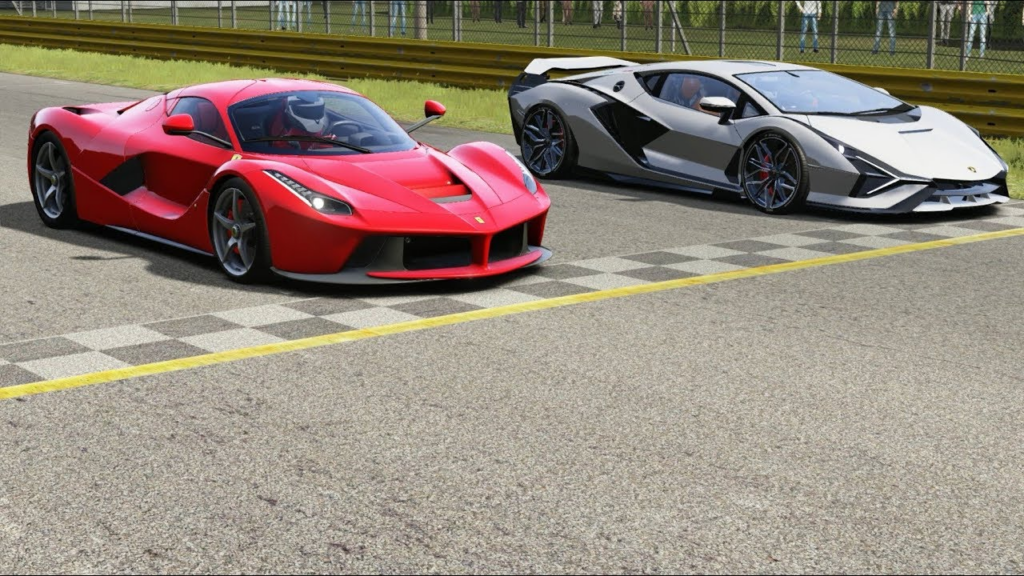
The origins of this legendary rivalry are, as many automotive historians note, straight out of a dramatic screenplay. It begins in the early 1960s, a time when Ferrari was not just a manufacturer but a symbol of Italian automotive dominance. The man at the center of this emerging conflict, Ferruccio Lamborghini, was already a titan in his own right, having built a global empire in agricultural machinery with Lamborghini Trattori.
Despite his success, Ferruccio was a man who demanded perfection in all aspects of his life, and his passion for luxury automobiles was no exception. He owned several Ferraris, but he was often left dissatisfied, particularly with the clutch system on some models. Unsatisfied with Ferrari’s refusal to address his concerns, Ferruccio, driven by a potent combination of pride and mechanical ingenuity, made a bold declaration. If Ferrari would not build the car he desired, he would build his own. He would create a machine that not only matched Ferrari’s performance but surpassed it in every aspect, challenging the reigning champion of the Italian automotive landscape.
Enzo Ferrari, notoriously proud and fiercely territorial, was not known for entertaining complaints from those he deemed unworthy. Upon hearing Ferruccio’s concerns, Enzo’s legendary arrogance surfaced. The now-infamous retort, often quoted as, “You can drive a tractor but you will never drive a Ferrari,” was more than just a dismissal. It was a declaration of war.
This was the pivotal moment that ignited one of the most historical rivalries in automotive history. Ferruccio, witnessing Enzo’s prideful rejection, made a commitment: if Ferrari wouldn’t fix the issues, he would build a better car. The ambition wasn’t merely about speed; it was about creating a machine that embodied beauty, comfort, and blistering performance in a single package. In 1963, the Lamborghini marque was born, an entity created not just to build cars, but to challenge the throne of the undisputed king of the Italian automobile market. The stage was set for a rivalry that would define the next generation of supercars.
Lamborghini Miura: The Revolution That Changed the Game
The world got its first true taste of this rivalry when Lamborghini unveiled the Miura in 1966. This vehicle was not just an evolution of the sports car; it was a radical revolution that completely redefined the automotive landscape. Low, wide, and featuring a mid-engine layout—a design that was both stunning and unconventional for its time—the Miura was unlike anything the world had ever seen. It was a rolling manifesto of Ferruccio’s vision, a vehicle that broke every rule of automotive design while delivering breathtaking performance.
The Miura established a new standard for what a high-performance road car could be. Its mid-engine architecture allowed for a more balanced weight distribution and a lower center of gravity, providing superior handling and stability at high speeds. This revolutionary approach to vehicle design would soon become the hallmark of the supercar segment, with competitors scrambling to emulate Lamborghini’s success. The Miura was more than just a car; it was a statement. It proved that Lamborghini was not just entering the automotive world to compete; it was here to dominate.
While the world marveled at the Miura’s innovation, Ferrari was not idle. The Italian marque responded with its own masterpiece, the Daytona. Known for its speed and powerful V12 engine, the Daytona was a classic front-engined grand tourer that stayed true to Ferrari’s heritage. Yet, compared to the Miura’s avant-garde design and radical engineering, the Daytona felt somewhat conservative. This clash between Lamborghini’s audacious innovation and Ferrari’s traditional approach only intensified the rivalry, setting the stage for decades of competition and technological advancement.
The Clash of Design: Sharp vs. Sleek
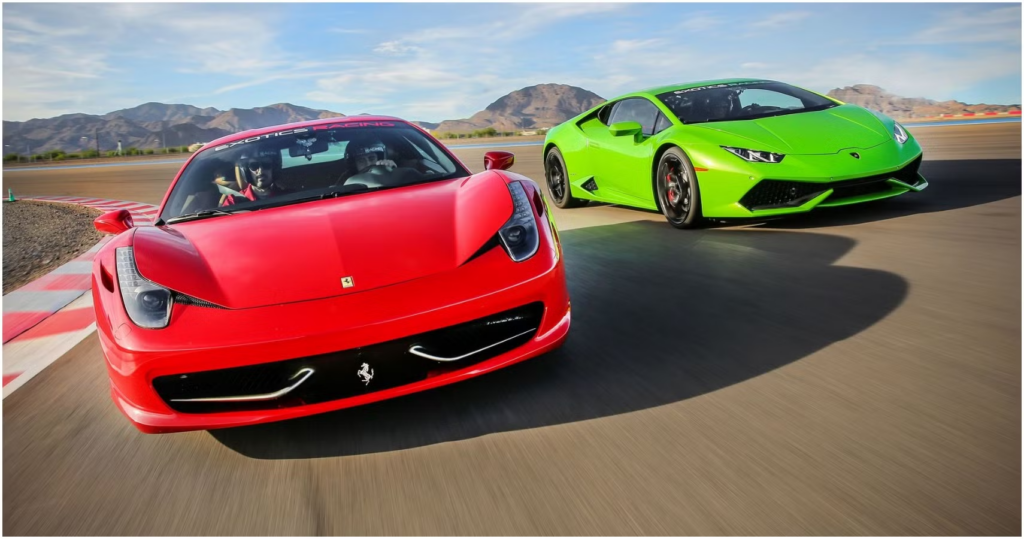
The rivalry between Lamborghini vs. Ferrari extends far beyond performance metrics and track records; it is a battle of design ideologies that reflect the core values of each brand. Lamborghini’s design language is defined by its bold, angular, and often futuristic aesthetic. Vehicles like the Countach, Aventador, and Huracán are characterized by sharp lines, aggressive intakes, and a visual presence that demands attention. They are designed to look fast, intimidating, and unapologetically bold.Lamborghini cars scream attention, serving as rolling works of art that embody avant-garde automotive design.
Ferrari, on the other hand, leans towards flowing lines and elegant aggression. From the classic 288 GTO to the modern F8 Tributo, Ferrari’s design philosophy is characterized by aerodynamic efficiency, sculpted bodywork, and a timeless sense of grace. Ferrari’s design language is all about sleek dominance, a perfect marriage of performance and beauty.
Design-wise, Lamborghini is the show-off. Its cars are designed to be seen, heard, and admired from every angle. They are flamboyant, extroverted, and unapologetic in their pursuit of attention. Ferrari, in contrast, is the silent assassin. Its cars exude understated elegance and quiet power, conveying a sense of refined performance without shouting from the rooftops. Ferrari’s design appeals to those who appreciate subtle beauty and timeless elegance, while Lamborghini targets those who embrace audacious style and cutting-edge innovation.
The Race That Never Was: Track Dominance vs. Street Supremacy
Though the Lamborghini vs. Ferrari rivalry never fully materialized in a head-to-head race on the track, the competitive spirit has never faded. The rivalry remains as potent as ever. On one side, Ferrari has always been the dominant force in motorsports, particularly in Formula 1, where its storied history and consistent success have established it as a legend of the racing world. Enzo Ferrari’s passion for motorsport drove the development of Ferrari’s road cars, infusing them with race-bred technology and performance.
Meanwhile, Lamborghini has always focused on manufacturing luxury performance street cars. While Lamborghini’s road cars are undoubtedly fast, their primary purpose is to deliver an exhilarating driving experience on the road. They prioritize bold design, raw power, and a sense of theater that sets them apart from the competition.
The historical truth of this rivalry can be summed up by one simple fact: Ferrari dominates the track, and Lamborghini rules the streets. Ferrari’s dedication to racing has honed its engineering capabilities, resulting in vehicles that excel on the circuit. Lamborghini, driven by its independent spirit and focus on road performance, has created a distinct identity as a manufacturer of luxury supercars that captivate the attention of street-driving enthusiasts.
Tech Rivalry: V12 Roars and Carbon Fiber Wars
Both brands are in a constant arms race to push the boundaries of automotive technology. They are forever testing what a car can be, utilizing cutting-edge innovation to deliver faster, more powerful, and more efficient vehicles.
Take the Ferrari SF90 Stradale as an example—a 1,000-horsepower plug-in hybrid supercar featuring sophisticated electronics and race-inspired engineering. It represents the pinnacle of Ferrari’s commitment to technological advancement. Now consider the Lamborghini Revuelto, a hybrid V12 that boasts a visually stunning design and frightening acceleration.
These vehicles epitomize the intense competition between the two brands. Ferrari’s focus on lap times and launch control showcases its dedication to track performance, while Lamborghini’s bold design and raw power reflect its commitment to street dominance. The companies are locked in an auto arms race to redefine speed, continually raising the bar for what is possible in the automotive world.
This commitment to technological innovation has led to the development of some of the most advanced performance vehicles ever created. From hybrid drivetrains to lightweight materials and cutting-edge electronics, both brands consistently push the boundaries of automotive engineering. This relentless pursuit of perfection has driven the evolution of the supercar segment, resulting in vehicles that are not only faster and more powerful but also more efficient and technologically advanced than ever before.
Soundtrack of a Rivalry: The Roar That Defines the Legend
When debating the Lamborghini vs. Ferrari rivalry, one of the most passionate discussions revolves around the sound of their engines. Ask any car enthusiast, and they will likely have a strong opinion on which brand produces the superior exhaust note.
The Lamborghini V10 and V12 engines, famously featured in the Huracán and Aventador, roar like a wild animal in the jungle, with a sound that can be heard from kilometers away. These sound waves are powerful and visceral, designed to shake the earth beneath you and send shivers down your spine.
Ferrari, on the other hand, produces a high-pitched, melodic sound that resembles an opera. The Ferrari Italia and F40 have a refined, sophisticated tone that is