




Lamborghini vs. Ferrari: A Tale of Ego, Fire, and Automotive Supremacy
The automotive landscape is populated by titans, luxury marques that evoke not just awe, but deep-seated loyalty and fervent debate. Among these legends, two names stand above the rest, commanding global recognition, technological innovation, and passionate cult followings: Lamborghini and Ferrari. The rivalry between these Italian automotive behemoths is more than a commercial competition; it is a legendary feud born from pride, fueled by engineering prowess, and sustained through generations of relentless innovation.
For discerning enthusiasts and seasoned collectors, the choice between a Lamborghini vs Ferrari comparison often feels less like a decision and more like an ideological declaration. It’s the difference between raw, unadulterated aggression and refined, track-derived dominance. It’s the clash between an avant-garde design philosophy and timeless Italian elegance.
In this comprehensive exploration, we delve deep into the heart of this iconic rivalry. Drawing upon decades of automotive evolution, technological advancements, and market dynamics, we will dissect the factors that separate these two titans. We will examine the evolution of their respective design languages, the technological arms race in their engine development, their diverging strategies in the burgeoning electric vehicle (EV) sector, and the nuanced cultural identity that defines each brand.
This is not merely a comparison of specifications. It is an analysis of the soul of two automotive dynasties that have shaped the very definition of the supercar. Whether you identify with the roaring V12 of a raging bull or the high-pitched siren of a Prancing Horse, understanding the Lamborghini vs Ferrari dynamic offers invaluable insight into the pinnacle of automotive engineering and desirability.
The Origins of the Feud: A Clash of Titans
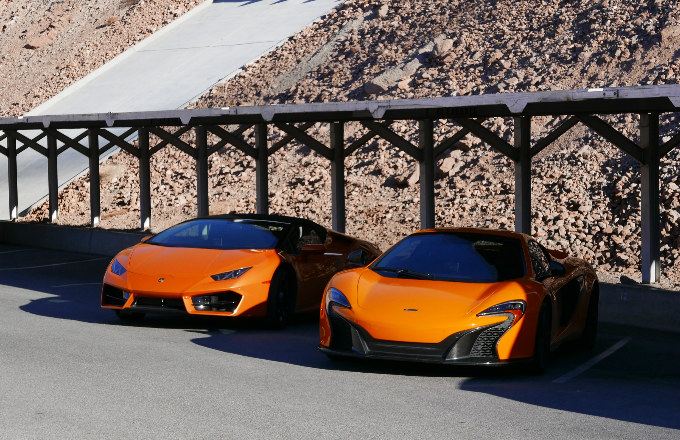
The history of the Lamborghini vs Ferrari rivalry is deeply rooted in the personality and ambition of two men who once represented the pinnacle of Italian ingenuity. The story begins not with automotive engineering, but with tractors and frustration.
Ferruccio Lamborghini was a highly successful industrialist known for manufacturing tractors, but he was also a man of refined taste and demanding standards. He owned several Ferraris, appreciating their performance and engineering, but he found them inconsistent. Specifically, he was often critical of the clutch systems and the general refinement of the cars, finding them to be essentially racing cars thinly disguised for road use.
In a pivotal moment in automotive history, Lamborghini sought to address these concerns directly with Enzo Ferrari himself. He visited the legendary founder of Ferrari at the factory in Maranello to offer his feedback and suggestions for improvement, particularly regarding the gearbox quality. However, the reception was not what he expected. Enzo Ferrari, notoriously proud and fiercely protective of his brand’s legacy, allegedly dismissed Lamborghini’s concerns outright, making it clear that he did not welcome outside criticism.
The anecdote, popularized over time, suggests that Enzo stated something along the lines of, “You can drive a tractor, but you’ll never drive a Ferrari.”
This perceived arrogance and dismissal ignited Ferruccio Lamborghini’s pride. Instead of accepting the slight, he decided to build his own car—a car that would not only rival Ferrari in performance but surpass it in luxury, comfort, and precision. In 1963, Automobili Lamborghini was born.
The intent was clear: to challenge Ferrari’s dominance, not just by building a fast car, but by crafting a superior automobile that addressed the very frustrations Lamborghini had experienced. This moment marked the beginning of one of the most iconic automotive rivalries of all time. It was a dispute that moved from a gentleman’s disagreement to a head-to-head technological and stylistic war on the world stage.
The Evolution of Design: Angular Aggression vs. Elegant Lines
The divergence between Lamborghini and Ferrari is perhaps most evident in their respective design philosophies. The Lamborghini vs Ferrari design debate often pits sharp, aggressive angularity against organic, flowing elegance.
Lamborghini: The Raging Bull’s Avant-Garde Aesthetics
From its inception, Lamborghini has embraced a design language that is unapologetically dramatic and futuristic. This aesthetic was truly defined with the launch of the Lamborghini Miura in 1966, a revolutionary mid-engined supercar that set a new standard for automotive design. The Miura’s low-slung, sensual curves shocked the world, but it was the Lamborghini Countach that cemented the brand’s image as the epitome of sharp, angular aggression.
Lamborghini’s design philosophy, often referred to as “Extreme,” relies on strong geometric shapes, sharp creases, and an almost architectural precision. Cars like the Aventador, Huracán, and the Urus SUV continue this tradition, featuring bold, wedge-shaped profiles that appear to be sculpted from metal and carbon fiber.
Key Design Elements:
Sharp Edges: High-contrast lines that define the car’s profile, giving it a distinctive, almost weapon-like appearance.
Low Profile: Extremely low ground clearance and a wide stance, emphasizing speed and stability.
Dramatic Proportions: Often featuring scissor doors (vertical-lifting) that add an element of theatricality and performance.
Aggressive Stance: Lamborghini cars are designed to look fast even when stationary, embodying a sense of raw, pent-up power.
In the Lamborghini vs Ferrari design comparison, Lamborghini is the automotive showstopper. Its cars are designed to dominate attention, exuding an aura of rebellion and avant-garde innovation.
Ferrari: The Prancing Horse’s Seamless Elegance
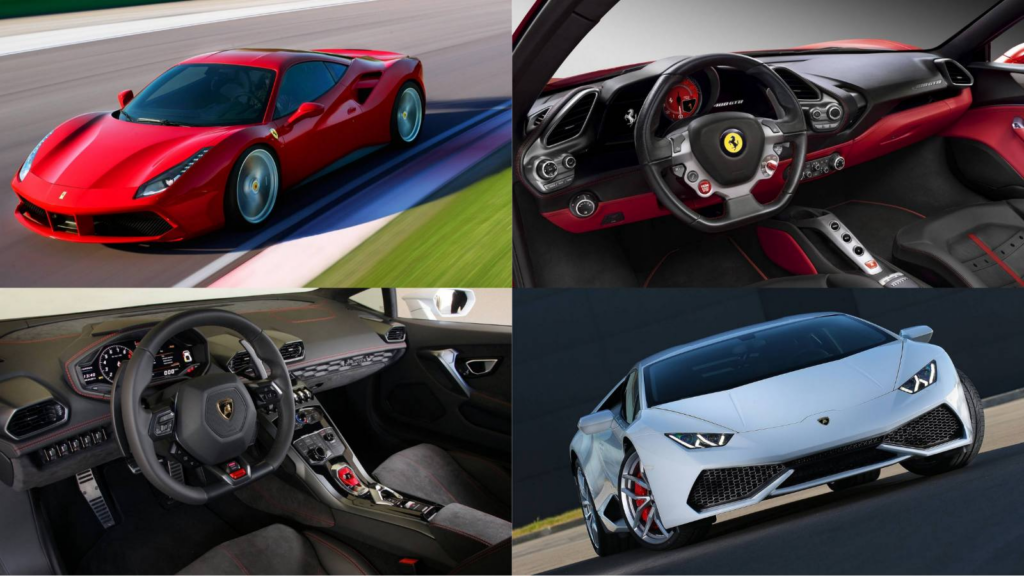
Ferrari’s design philosophy is rooted in aerodynamics, performance, and a sophisticated Italian elegance. While the brand has evolved over the decades, its core aesthetic remains consistent: a blend of racing pedigree and sensual curves.
The Ferrari Daytona, as a response to the Miura, exemplified this difference. It was a beautiful, muscular car, but its traditional front-engine layout and flowing lines were a deliberate contrast to Lamborghini’s radical mid-engine configuration. Throughout its history, from the F40 to the F8 Tributo and the SF90 Stradale, Ferrari has prioritized seamless integration of form and function.
Key Design Elements:
Organic Curves: Aerodynamic lines that channel airflow, emphasizing speed and stability through sculpted surfaces.
Timeless Proportions: Traditional sports car proportions with long hoods and short decks, blending elegance with aggression.
Subtle Aggression: Ferrari’s design speaks in a whisper rather than a shout. The aggression is inherent in the car’s posture and performance, not in exaggerated styling.
Premium Materials: A focus on luxurious materials and meticulous craftsmanship, reflecting the brand’s exclusivity and heritage.
When comparing Lamborghini vs Ferrari, the design difference is clear: Lamborghini is the iconoclast seeking to shock and awe, while Ferrari is the master craftsman perfecting a timeless formula of elegance and performance.
The Technological Race: From V12 Roars to Hybrid Supremacy
The rivalry between Lamborghini and Ferrari extends deep into the heart of engineering. The Lamborghini vs Ferrari technological debate is a relentless pursuit of horsepower, torque, and innovative materials that push the boundaries of what a road car can achieve.
The Sound of the V12 and the Soul of the Naturally Aspirated Engine
For decades, both brands were synonymous with the thunderous roar of the naturally aspirated V12 engine. The mechanical soundtrack of a Lamborghini or a Ferrari has long been a defining characteristic of the driving experience.
Lamborghini’s V10s and V12s, such as those found in the Gallardo, Huracán, and Aventador, are often described as visceral, untamed, and brutal. The Lamborghini V12 is legendary for its deep, commanding rumble that can be heard from miles away, creating a physical vibration that permeates the driver’s being.
Ferrari’s V12s, like those in the 812 Superfast and the new 12Cilindri, are renowned for their high-revving, operatic pitch. They offer a more surgical, precise sound—sharp, metallic, and exhilarating. Many enthusiasts argue that Ferrari engines possess a harmonic complexity that is the pinnacle of natural aspiration.
The Lamborghini vs Ferrari Sound Debate:
Lamborghini: Raw, aggressive, guttural roar. Shakes the earth and grabs attention.
Ferrari: High-pitched, operatic shriek. Surgical, precise, and refined.
The Innovation Battlefield: Electrification and Hybridization
The automotive industry is currently undergoing a profound transformation with the advent of electric vehicles (EVs) and hybridization. In this new era, the Lamborghini vs Ferrari debate has taken on a new dimension as both brands adapt to the changing landscape while struggling to retain the soul of their traditional powertrains.
Lamborghini’s Bold Leap into Hybrid Power
Lamborghini has historically been a champion of high-revving, naturally aspirated engines. However, as emissions regulations tighten and the market shifts toward electrification, the company has been forced to adapt.
Key Lamborghini Electrification Developments:
Revuelto: The successor to the Aventador, the Revuelto is Lamborghini’s first plug-in hybrid (PHEV). It features a V12 engine paired with three electric motors, delivering a combined output of over 1,000 horsepower. This represents a significant technological leap for the brand, integrating hybrid power with Lamborghini’s extreme performance ethos.
Urus PHEV: Following the trend, Lamborghini has introduced a plug-in hybrid version of its Urus SUV, offering a blend of performance and improved efficiency.
Future EV Strategy: Lamborghini has outlined a roadmap to transition to a fully electrified lineup by the end of the decade, with plans for both PHE