




Lamborghini vs Ferrari: The Billionaire’s Duel That Ignited the Soul of Speed
Since the roar of piston-driven engines first pierced the stillness of a quiet countryside, two names have stood as monuments to human aspiration: Lamborghini and Ferrari. To the uninitiated, these are simply icons of Italian engineering—exotic cars that define the word “supercar.” But for those who have spent years in the trenches of the automotive industry, these are not just brands; they are rival ideologies, a symphony of raw fury and elegant precision, a saga of ego, innovation, and rivalry that forever reshaped the automotive landscape.
In the rarefied world where hypercars whisper promises of 200mph speeds and carbon fiber weaves tapestries of aerodynamic mastery, the rivalry between Lamborghini and Ferrari is more than a headline—it is a benchmark for success, a financial calculator for potential investors, and a cultural touchstone for a generation obsessed with performance and prestige. Yet, beneath the gleaming chrome and sculpted alloys lies a story of human drama, an epic clash born not from market strategy but from wounded pride. This is not merely a comparison of horsepower metrics; it is a narrative of the soul of Italian engineering, where the Raging Bull challenges the Prancing Horse not just for speed, but for supremacy in a world that craves performance, luxury, and a legacy worth leaving behind.
The Genesis of Rage: A Tractor Driver’s Vindication
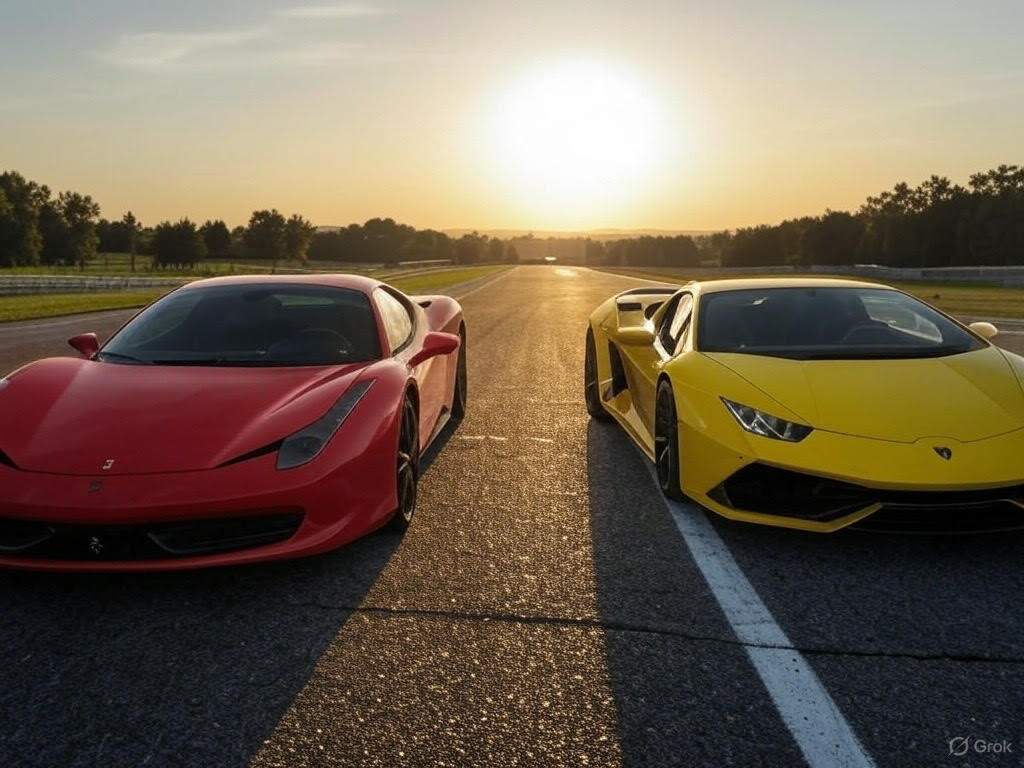
The legend of the Lamborghini vs Ferrari rivalry begins not in a design studio, but in a tractor factory. Ferruccio Lamborghini, a self-made industrialist who built a fortune manufacturing tractors and agricultural machinery, was a man of pragmatism, precision, and unparalleled ambition. He was also a connoisseur of fine automobiles, and by the early 1960s, he owned several Ferraris. However, the pragmatist in him was deeply unsatisfied with the racing-focused performance of the cars he adored.
For Ferruccio, Ferrari represented the pinnacle of Italian performance. He admired Enzo Ferrari’s unwavering dedication to racing, but he felt that the road cars—the expensive Ferrari for sale that so many aspired to own—lacked refinement and durability. The breaking point, according to industry lore, was the transmission. Ferruccio found the clutches of the Ferraris unreliable, often demanding a level of maintenance that he considered unacceptable for a luxury machine.
He approached Enzo Ferrari, not as a supplicant, but as a peer—a fellow entrepreneur who understood the mechanics of manufacturing and the psychology of quality. He offered his critique, expecting understanding and improvement. Instead, he was met with the legendary arrogance of Enzo Ferrari, who, according to Ferruccio, dismissed him with the cold observation that one might drive a tractor, but one could never drive a Ferrari.
That moment, fueled by pride and perceived condescension, was the spark that ignited the Lamborghini vs Ferrari firestorm. For Ferruccio, it was more than just a critique of a car; it was an insult to his intelligence and his capabilities as an engineer. He left the meeting not defeated, but defiant. If the master of the road could not provide the refinement and performance he sought, he would build his own. In 1963, from the ashes of a tractor factory, Automobili Lamborghini was born, dedicated to manufacturing cars that would not only match Ferrari but eclipse it in both luxury and performance.
The Strategic Disruption: How Lamborghini Changed the Game
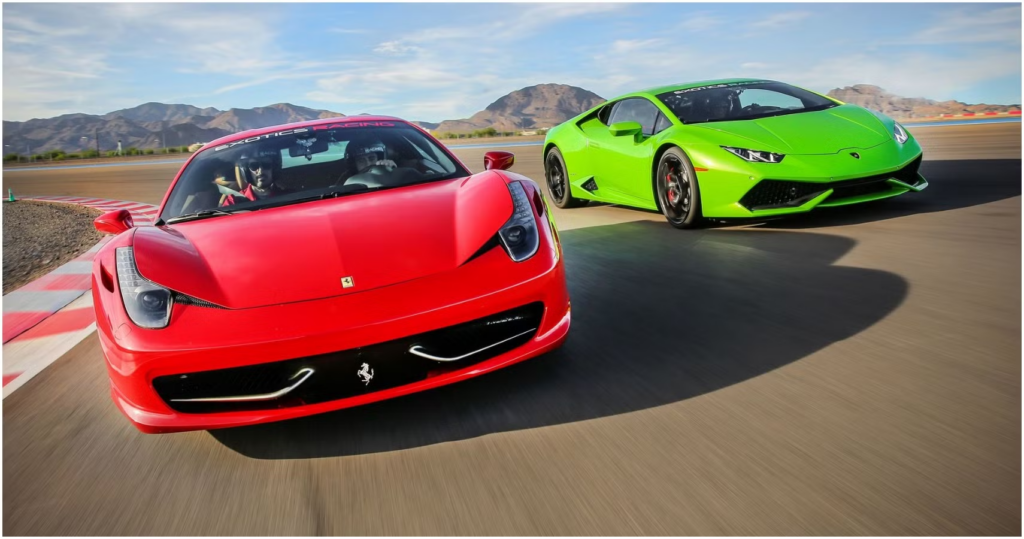
The genesis of Lamborghini was more than just a personal vendetta; it was a calculated market disruption. Enzo Ferrari operated under a philosophy that the primary purpose of his road cars was to fund his racing division, Scuderia Ferrari. He believed that his customers should accept the compromises of performance for the privilege of owning an extension of his racing heritage. He viewed the automotive industry as a hierarchy, with Ferrari at the apex.
Ferruccio Lamborghini, however, recognized a flaw in that thinking. He saw a burgeoning market of wealthy entrepreneurs and industrialists who wanted speed and performance but demanded a level of comfort, luxury, and refinement that traditional Italian manufacturers were unwilling to provide. By offering a car that was as beautiful as it was fast, and as comfortable as it was powerful, Lamborghini offered an alternative that fundamentally challenged the cost of high-performance engineering.
The initial financial impact was immediate. Potential buyers, who previously had no choice but to buy a Ferrari, now had a compelling alternative. The allure of a car that was distinct, exclusive, and engineered with a pragmatic owner’s demands in mind began to shift consumer behavior. This created a financial tension—a competitive pressure that forced Ferrari to reconsider its approach to luxury and performance.
The Miura Manifesto: The Revolution That Realigned the Supercar Landscape
The world got its first taste of Lamborghini’s audacious challenge in 1966 with the introduction of the Miura. It was a vehicle that defied convention, a rolling masterpiece that redefined the supercar genre. With its mid-engine layout, sensual curves, and intoxicating performance, the Miura was not just a car; it was a declaration of war.
For decades, the best Ferrari models dominated the road and the track with their front-engine configurations. The Miura turned that paradigm on its head. By placing the engine behind the driver, Lamborghini not only achieved superior weight distribution and handling but also created a silhouette that was low, wide, and impossibly aggressive. It was the birth of the modern supercar, and Ferrari, though initially dismissive, could no longer afford to ignore the seismic shift.
The Lamborghini Miura set a new standard for performance and design. It proved that power was not just about engine size but about how that power was delivered. It forced a rethink of how luxury and performance could coexist, laying the foundation for a technological arms race that continues to this day. For those considering which car to buy, the Miura represented a paradigm shift—a promise of something radically new and exhilarating that Ferrari could not offer.
The Clash of Ideologies: Sharp vs. Smooth, Loud vs. Subtle
The Lamborghini vs Ferrari rivalry extends far beyond mere engineering prowess; it is a profound philosophical divide expressed through design, sound, and overall driving experience. While both brands have evolved over time, their core DNA remains distinct, catering to fundamentally different tastes and motivations among their discerning clientele.
Design Evolution: From Angular Fury to Sophisticated Sculpting
Lamborghini’s design language has historically been defined by shock and awe. The iconic Countach, a product of the 1970s, epitomized this philosophy with its sharp angles, scissor doors, and aggressive stance. It was a statement piece—a Lamborghini for sale that screamed attention, designed to look intimidating and exotic from every conceivable angle. Even modern descendants like the Aventador and Huracán maintain this lineage of aggressive, wedge-shaped styling that prioritizes visual drama.
Ferrari, on the other hand, has always leaned toward elegance and aggression in equal measure. Its designs, while undeniably powerful, often feature more organic, flowing lines that emphasize aerodynamic efficiency and aesthetic grace. The classic Ferraris and modern icons like the F8 Tributo exhibit a seamless integration of form and function, creating vehicles that are beautiful in their composition rather than simply bold in their presentation.
In terms of vehicle comparison, Lamborghini is the show-off—the visual feast designed to turn heads and capture the imagination. Ferrari is the silent assassin—refined, sophisticated, and intimidating with a quiet confidence that belies its raw capabilities. This design dichotomy helps buyers understand which car is best for their personality. Do they want to make a statement of rebellion and raw power (Lamborghini), or do they prefer understated elegance and technological refinement (Ferrari)?
The Soundtrack of Speed: V10 Roars vs. V8 Crescendos
The aural experience of these machines is perhaps one of the most distinctive aspects of the Lamborghini vs Ferrari rivalry. While both brands produce high-revving engines that thrill enthusiasts, their characteristic sounds are distinctly different.
Lamborghini is renowned for the bellowing thunder of its V10 and V12 engines. The Huracán and Aventador offer a visceral experience—a raucous, guttural roar that fills the cabin with a primal ferocity. The exhaust notes are loud, raw, and unapologetic, often described as the sound of sheer violence. It is a sound that commands attention, a symphony of mechanical aggression that shakes the ground beneath you and announces its presence from miles away.
Ferrari, while certainly not quiet, often delivers a different kind of auditory pleasure. Its V8 and V12 engines typically produce higher-pitched, more refined notes—a high-frequency shriek or a piercing whistle that is often compared to a classical opera in its complexity and clarity. It is an intricate and intoxicating sound, but perhaps less overtly aggressive than the Lamborghini’s brute force. Where Lamborghini’s roar is a declaration of dominance, Ferrari’s sound is a testament to precision and engineering mastery.
This difference in sound is a critical factor when considering car price and value. A buyer must decide if they want the visceral thrill of the Lamborghini’s untamed fury or the elegant precision of the Ferrari’s refined symphony. Both options represent significant financial investments, but the choice often comes down to the emotional response triggered by the sound and the visual experience.
The Technological Race: Hybrid Ambitions and Electric Frontiers
In the ever-evolving automotive landscape, the Lamborghini vs Ferrari rivalry has entered a new era defined by electrification and sustainable performance. Recognizing the shifting market dynamics, the demand for electric car options, and the growing emphasis on environmental responsibility, both brands have embraced hybridization and battery technology without compromising their commitment to performance.
Ferrari’s recent offerings, such as the Ferrari SF90 Strad