




The Prancing Horse vs. The Raging Bull: A Deep Dive into the Ultimate Automotive Rivalry in 2026
The automotive world is defined by battles fought in engineering, design, and pure adrenaline. Among these legendary confrontations, the Lamborghini vs Ferrari rivalry stands alone—not just a mere comparison of high-performance vehicles, but a fundamental conflict of philosophies. It’s a feud born from ego, fueled by engineering brilliance, and forever etched in the chronicles of automotive history.
As we navigate the modern landscape of 2026, this rivalry remains as potent as ever. It reflects not only the evolution of supercars but also the competing visions of what luxury, power, and performance truly mean. This isn’t a debate that died with Enzo Ferrari or Ferruccio Lamborghini; it continues today in every showroom, every track day, and every automotive decision.
This comprehensive guide explores the enduring saga of Lamborghini vs Ferrari, tracing its roots, dissecting their modern approaches, and helping discerning buyers decide which iconic nameplate best fits their own legacy.
The Spark That Ignited a Legend
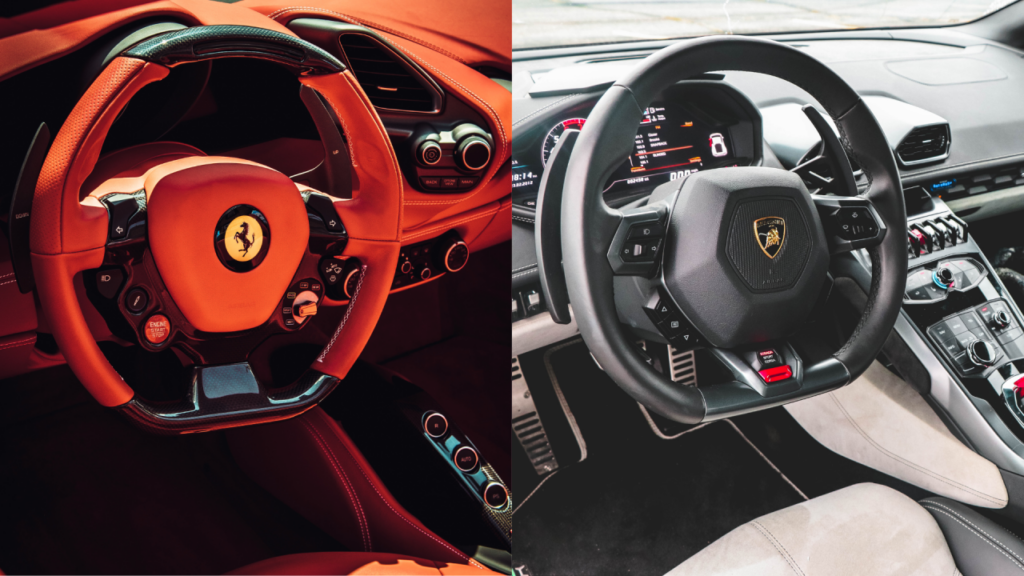
To understand the intensity of Lamborghini vs Ferrari, we must travel back to the genesis of this legendary conflict. The story begins not with a planned competition, but with a moment of profound dissatisfaction.
In the early 1960s, Ferruccio Lamborghini—a man already famous as a successful manufacturer of tractors and industrial machinery—was a devoted owner of several Ferrari models. He admired the engineering, but he wasn’t entirely satisfied. His most persistent grievance centered on the clutches, which he found unreliable and inefficient for everyday use. He believed he could do better.
Armed with the confidence that only a successful industrialist can possess, Lamborghini personally approached Enzo Ferrari with his observations and his proposed improvements.
The response he received would become the spark that lit the fire. Enzo Ferrari, already a titan of the industry and a fiercely proud man, notoriously dismissed Lamborghini’s technical advice. The story goes that Enzo declared that a tractor driver would never understand the nuances of a race-bred machine, famously stating, “You can drive a tractor, but you will never drive a Ferrari.”
This haughty dismissal was not just a rejection of an idea; it was a profound insult to Ferruccio Lamborghini’s pride and his engineering prowess. The moment he left that meeting, the decision was made. If Ferrari would not listen, he would build his own car. A car that would not just equal Ferrari but surpass it.
And so, the Lamborghini marque was born.
The Genesis of the Raging Bull
In 1963, Ferruccio Lamborghini unveiled his creation, a machine designed to challenge the established order of the automotive world. He aimed to build cars that offered beauty, refinement, and cutting-edge performance, all wrapped in a package that spoke of extreme luxury.
This wasn’t just about speed; it was about making a statement. By directly challenging Ferrari, Lamborghini set the stage for one of the most dramatic and defining rivalries in automotive history. While many car comparisons focus on specs and features, the Lamborghini vs Ferrari dynamic is fundamentally about contrasting philosophies: innovation versus tradition, wild ambition versus refined heritage.
This conflict transcends mere corporate competition; it’s a battle of wills, a war of ideologies played out on the world stage. And for the discerning buyer of 2026, understanding this history is crucial to grasping the soul of each brand.
The Miura vs. Daytona: The Opening Salvo
The rivalry took center stage in the mid-1960s with the unveiling of two paradigm-shifting machines that defined what a supercar could be.
The Lamborghini Miura (1966)https://www.autoblog.com/.image/c_fill,g_faces:center/NzowMDAwMDAwMDAxMDUzMzIz/ferrari-sf90-stradale-vs-lamborghini-revuelto-5.png
In 1966, Lamborghini launched the Miura—and it was nothing short of a revelation. This car was revolutionary for its mid-engine layout, its incredibly low and wide stance, and its exotic, muscular design. It wasn’t just a fast car; it was a rolling work of art that defied convention. The Miura immediately grabbed the attention of the world, proving that Lamborghini was a serious contender. It also established a blueprint for high-performance road cars that would influence the industry for decades.
The Ferrari 365 GTB/4 Daytona (1968)
Ferrari’s response was the Daytona. While blisteringly fast and undeniably powerful, it stuck to the traditional front-engine configuration. The Daytona was a celebration of pure, front-engined muscle—a machine of brute force and timeless beauty. It epitomized the established Italian GT philosophy, while the Miura represented a radical departure into the future.
This clash of engineering approaches set the tone for the Lamborghini vs Ferrari dynamic for years to come. Lamborghini pushed the boundaries of design and packaging, while Ferrari defended its throne with mastery of the front-engine GT format.
The Anatomy of the Rivalry: Design and Aesthetics
If you compare Lamborghini vs Ferrari, one of the most immediate differences is the aesthetic language of each brand. It’s a fundamental divergence in design philosophy that appeals to different personalities and lifestyles.
Lamborghini: The Art of Shock and Awe
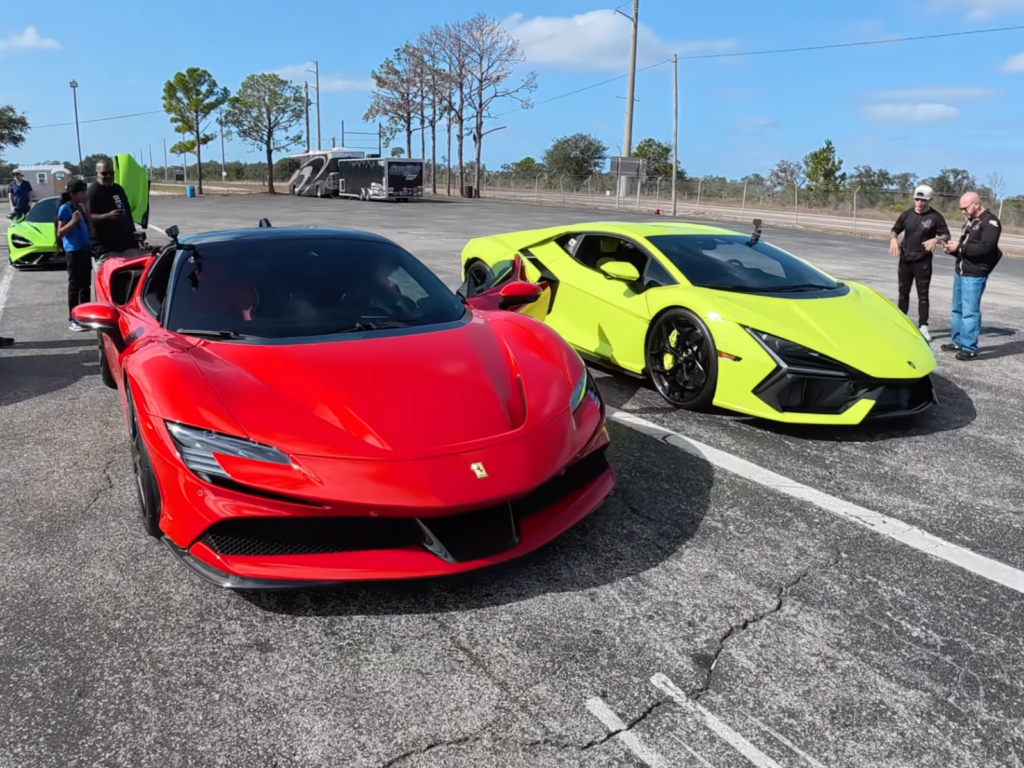
Lamborghini’s design is characterized by aggression, sharp angles, and angular aggression. It is loud, unapologetic, and designed to demand attention. Look at the iconic Countach, the muscular Aventador, or the sharp lines of the Huracán and its successor, the Revuelto—these cars are statements of pure intent. Their design speaks of a rebellious spirit, a futuristic vision, and a desire to stand out.
Lamborghini designers embrace the dramatic, creating silhouettes that are often compared to fighter jets or stealth aircraft. This approach ensures that when a Lamborghini arrives, it dominates the landscape. For the buyer in 2026, owning a Lamborghini means owning an automotive sculpture—a piece of art that prioritizes visual impact and head-turning presence.
Ferrari: The Epitome of Elegant Aggression
Ferrari, on the other hand, leans toward flowing lines, aerodynamic elegance, and classic proportions. From the legendary 288 GTO to the modern F8 Tributo, Ferrari’s designs exude refinement, speed, and a timeless sense of class. Ferrari often uses organic curves, aggressive but smooth contours, and a design language that says “sophistication” as much as “speed.”
Ferrari’s design is about controlled power. It represents a heritage of racing pedigree, where every line serves a functional purpose but also contributes to an overall sense of beauty and dominance. For the buyer in 2026, owning a Ferrari means owning a piece of Italian racing history, a machine that represents the pinnacle of automotive artistry and engineering refinement.
The Verdict:
Lamborghini: Shock and Awe. The visual equivalent of a heavy metal concert.
Ferrari: Grace and Aggression. The visual equivalent of a precision-engineered symphony.
Engine Philosophy: The V12 War
The heart of any Lamborghini vs Ferrari comparison lies in the soul of the car—the engine. While both brands are leaders in performance technology, they have historically taken different approaches to power delivery.
The Ferrari Lineup: Precision and Heritage
Ferrari has long been synonymous with the V12 engine—a symphony of high-revving performance and motorsport pedigree. Cars like the SF90 Stradale, 296 GTB, and the new 12Cilindri Spider showcase Ferrari’s commitment to pushing the limits of internal combustion engineering. Ferrari excels at creating drivable power, offering performance that is both exhilarating and manageable.
The Ferrari driving experience is often described as visceral, responsive, and intensely connected to the road. Their hybrid technologies, seen in the SF90, blend the raw power of a V12 with the instant torque of electric motors, setting new benchmarks for performance and efficiency.
The Lamborghini Approach: Volume and Drama
Lamborghini has traditionally favored brute force and dramatic presence. They are masters of the V10 and V12 engine configurations, known for their aggressive soundtracks and immense power output. The V10 in the Huracán provides a visceral, high-pitched roar that is uniquely Lamborghini, while the V12 in models like the Aventador (and its successor, the Revuelto) delivers a deep, earth-shaking rumble that signifies pure power.
Lamborghini’s philosophy often centers on creating an emotional spectacle. It’s about the raw emotion of acceleration, the drama of the exhaust note, and the visual excitement of the entire package. In 2026, Lamborghini is also embracing electrification with the Revuelto, proving that sustainability does not mean sacrificing performance or dramatic flair.
Which Engine Philosophy is Right for You?
This is where the Lamborghini vs Ferrari choice becomes deeply personal for a buyer in 2026:
If you seek raw, visceral emotion and unforgettable drama: A V10 Lamborghini Huracán or a V12 Aventador delivers an experience unlike any other. The sound alone is worth the price of admission.
If you demand precision, refinement, and motorsport heritage: A Ferrari model, especially with their latest V12 or hybrid technology, offers a level of sophistication and driving engagement that few can match.
If you want a hybrid masterpiece: The Ferrari 296 GTB and SF90 Stradale combine the best of electric power and internal combustion for a truly futuristic driving experience.
The Economics of Desire: Cost and Investment in 2026
Investing in a Lamborghini vs Ferrari is not just a financial decision; it’s an investment in a lifestyle. As of