




The Raging Bull vs. The Prancing Horse: A Comprehensive Showdown in American Automotive Culture
The Genesis of an Automotive Iconoclasm
The automotive landscape of the United States is dominated by a deep-seated fascination with performance, engineering, and Italian automotive artistry. Nowhere is this more apparent than in the perpetual debate: Lamborghini vs Ferrari. This isn’t merely a comparison of specifications or horsepower ratings; it represents a fundamental ideological clash between two titans of engineering that has shaped the luxury sports car market for generations. For decades, enthusiasts, collectors, and industry analysts in the U.S. have engaged in this passionate dialogue, often viewing it as more than just a rivalry, but as a defining narrative in modern automotive history.
The genesis of this conflict is a story rich with hubris, ambition, and an unyielding pursuit of perfection. At the heart of the story is Ferruccio Lamborghini, a visionary industrialist whose primary business was not building hypercars, but manufacturing agricultural machinery. He established Automobili Lamborghini after achieving remarkable success with Lamborghini Trattori, and his foray into automotive manufacturing was largely driven by personal dissatisfaction. Lamborghini was a discerning customer and a connoisseur of Italian engineering, yet he found that even his own collection of Ferrari vehicles failed to meet his exacting standards. Specifically, he reportedly felt the clutch systems in Ferrari’s road cars were unsatisfactory, an oversight he found unacceptable for a vehicle of that price point and prestige.
The Insult That Ignited a Legacy
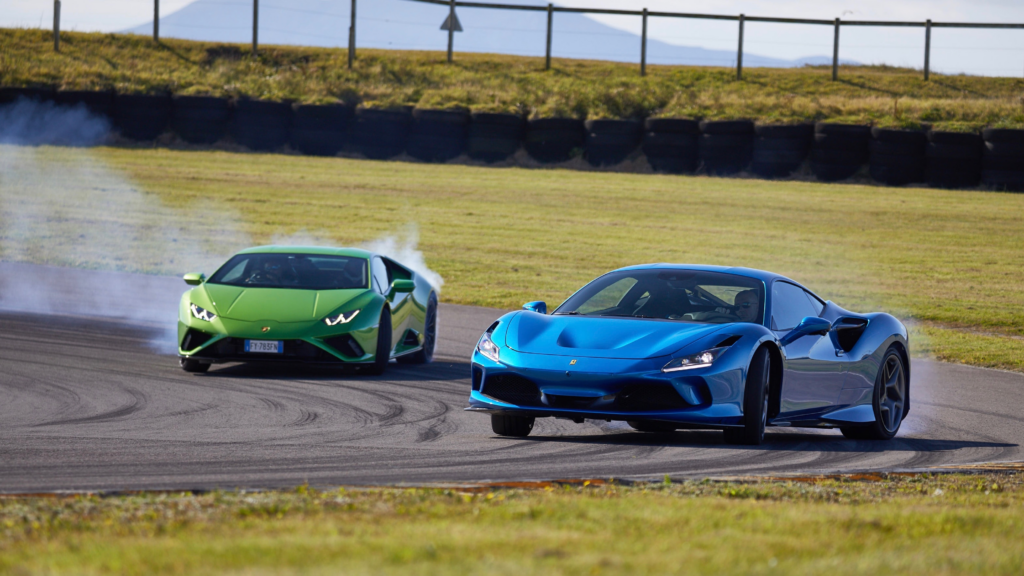
The prevailing narrative, widely accepted among U.S. car enthusiasts, suggests that Lamborghini approached Enzo Ferrari with his grievances. The response, whether apocryphal or factual, is legendary and encapsulates the core of the “Lamborghini vs Ferrari” ethos. Enzo Ferrari, the uncompromising architect of his automotive empire, reportedly rebuffed Lamborghini, dismissing his complaints and stating that a man who drives a tractor would never truly understand the needs of a Ferrari driver.
This statement, fueled by ego and arrogance, served as the catalyst for the creation of a rival. Ferruccio Lamborghini, already a master of engineering and manufacturing, took this insult personally. He decided that if Ferrari could not produce a car that satisfied his requirements, he would build one himself that would not only match Ferrari but exceed it. This moment marked the birth of Automobili Lamborghini, an entity conceived not merely to compete, but to fundamentally challenge the dominance of the Italian automotive aristocracy that Enzo Ferrari had so carefully built. The Ferrari vs Lamborghini rivalry was therefore born from a personal slight, transformed into a crusade to prove that Lambo could engineer a superior machine.
A Battle of Ideologies and Engineering Philosophies
The trajectory of these two brands, particularly within the American market, is defined by their distinct approaches to automotive engineering and design. The comparison between a Ferrari and a Lamborghini often boils down to a preference for a particular philosophy of performance.
The Lamborghini Miura: A Revolution in Rolling Sculpture
One of the defining moments in the Lamborghini vs Ferrari narrative occurred in the mid-1960s with the launch of the Miura. The Miura was a radical departure from the accepted norms of automotive design and engineering at the time. It was a low-slung, wide-bodied masterpiece that featured a groundbreaking mid-engine configuration. This architecture had previously been confined to racing prototypes, but Lamborghini introduced it to the street, creating a visual and performance statement that stunned the world. The Miura was not just a fast car; it was a rolling piece of art, characterized by its extreme proportions and breathtaking aesthetics.
While the Miura was causing seismic shifts in the supercar world, Ferrari was not idle. Ferrari responded with the Daytona, a beautiful, high-performance grand tourer that maintained the traditional front-engine layout. This contrast perfectly encapsulated the evolving Lamborghini vs Ferrari debate. Lamborghini pushed the boundaries of design with a revolutionary mid-engine concept, while Ferrari leaned into its established racing heritage with a more refined, yet powerful, V12-powered front-engine configuration.
The legacy of the Miura cannot be overstated. It set a new standard for what a supercar should be: a symphony of aerodynamic efficiency, structural innovation, and raw aesthetic power. For American buyers seeking the ultimate expression of automotive performance, the Miura was the first tangible proof that Lamborghini was a serious contender, capable of challenging the long-established dominance of Ferrari.
The Art of Deception: Design as a Strategic Weapon
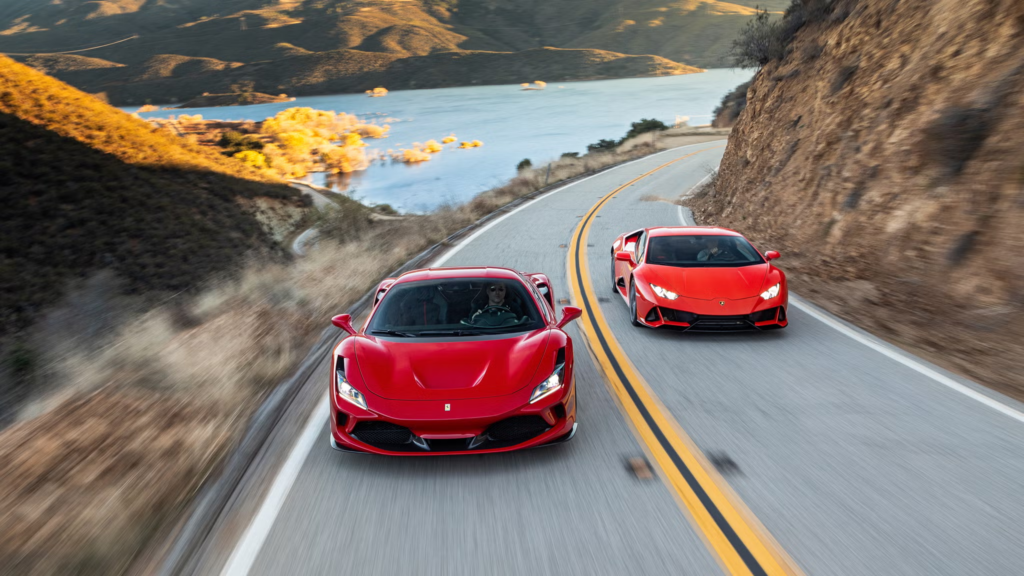
In the Ferrari vs Lamborghini comparison, design plays a crucial role in defining the identity of each brand. Lamborghini’s design language has always been bold, angular, and unapologetically aggressive. The Countach, Aventador, and Huracán models exemplify this philosophy with sharp lines, aggressive stances, and a “shock and awe” approach that captures attention instantly. These cars are designed to be noticed, to be the center of attention wherever they go. Lamborghini doesn’t just make fast cars; it makes statements.
Ferrari, on the other hand, generally leans toward flowing, aerodynamic lines that exude elegance and controlled aggression. From the 288 GTO to the F8 Tributo, Ferrari’s design is characterized by its seamless integration of form and function, creating a look that is both timeless and powerful. Ferrari is the silent assassin, the predator that strikes with precision and grace. The Ferrari vs Lamborghini design debate often centers on this distinction: the visual aggression of Lamborghini versus the refined elegance of Ferrari.
In the competitive American market, this divergence allows buyers to choose a car that reflects their personality. A driver who wants to be noticed will gravitate toward a Lamborghini, while someone who prefers subtle power and historical lineage will choose a Ferrari.
Technological Innovations and the Evolution of Speed
The rivalry between Lamborghini vs Ferrari has always been a technological arms race. Both brands are driven to push the boundaries of what is possible in automotive engineering, constantly innovating to deliver higher performance, greater efficiency, and more advanced technology.
The V12 Roars and the Carbon Fiber Wars
One of the most enduring aspects of this debate is the technological rivalry between these two marques. Ferrari has long been known for its championship-winning Formula 1 pedigree, which has informed its road car development. The Ferrari SF90 Stradale, for instance, is a technological marvel, featuring a 1,000-horsepower plug-in hybrid system and sophisticated race-derived electronics. This car represents Ferrari’s commitment to blending cutting-edge performance with race-proven technology.
In response, Lamborghini has also embraced hybrid technology with the Revuelto, a flagship supercar that pairs a V12 engine with electric motors, producing a combined output of over 1,000 horsepower. The Revuelto’s aggressive styling and breathtaking acceleration are a testament to Lamborghini’s refusal to compromise on its commitment to raw performance.
The Lamborghini vs Ferrari comparison often highlights this technological arms race. While Ferrari often emphasizes precision and track performance, Lamborghini focuses on providing a visceral, over-the-top experience. This drive for innovation has pushed both companies to constantly refine their engineering, leading to advancements in areas such as lightweight materials, aerodynamics, and powertrain technology.
The Soundtrack of the Rivalry: V10 vs V12
For American enthusiasts, the soundtrack of a car is as important as its performance. The Lamborghini vs Ferrari debate extends to the distinctive sounds of their engines. Lamborghini is renowned for its naturally aspirated V10 and V12 engines, which produce a loud, aggressive roar that can be heard for miles. The sound of a Huracán or an Aventador is often described as a primal scream, a visceral expression of raw power that resonates deeply with performance enthusiasts.
Ferrari’s engine notes, particularly those of their V12 models, are often described as more refined and melodic, like an opera of combustion. While equally powerful, Ferrari’s V12s often deliver a higher-pitched, more symphonic sound that speaks to a different kind of engineering precision. The Ferrari vs Lamborghini sound comparison reveals a fundamental difference in philosophy. Lamborghini delivers an aggressive, ear-splitting roar, while Ferrari offers a refined, almost melodic, tone that speaks to its heritage as a racecar manufacturer.
Ultimately, the choice between a Lamborghini or Ferrari sound comes down to personal preference. Some enthusiasts prefer the raw power and visceral thrill of a Lamborghini, while others are drawn to the refined elegance and melodic precision of a Ferrari. In the Lamborghini vs Ferrari debate, there is no wrong answer, only personal preference.
The Race for the American Market and Evolution in 2025
The Lamborghini vs Ferrari rivalry has evolved significantly over the years, particularly in the context of the American automotive market. As consumer preferences and technological advancements have changed, both brands have adapted to remain relevant and competitive.
The New Guard: Evolution in the EV Era
In the era of electrification, both Lamborghini vs Ferrari are navigating a paradigm shift in the automotive industry. The demand for sustainable and environmentally friendly vehicles has forced even the most traditional supercar manufacturers to innovate and adapt.
For Lamborghini, the future is electric, but they are committed to doing so in a way that remains true to their brand identity. Upcoming models like the Revuelto represent a hybrid future, offering a blend of V12 power and electric propulsion. Lamborghini is also working on fully electric vehicles that promise to deliver the same level of performance and excitement that enthusiasts expect from the brand. This commitment to electrification ensures that the Lamborghini vs Ferrari rivalry will continue in the electric age, with both brands pushing the boundaries of what is possible in terms of performance and sustainability.
Ferrari, meanwhile, is also venturing into the electric realm. The upcoming Ferrari EV is expected to be a technological marvel, combining the brand’s legendary performance with cutting-edge electric technology. The 12Cilindri Spider and SF