




The Enduring Feud of Sant’Agata and Maranello: Lamborghini Versus Ferrari
The Italian supercar saga is defined by a singular, blood-and-thunder rivalry. The Lamborghini versus Ferrari conflict is not merely a comparison of engineering prowess, but a seismic clash of ego, philosophy, and raw ambition that has shaped the very landscape of automotive excellence. This isn’t a debate; it’s a war of ideologies that began with personal pride and evolved into a relentless, world-altering arms race of speed, style, and heritage.
For decades, the world has watched as these two titans have pushed each other to the absolute edge. One, the symbol of track dominance and motorsport supremacy; the other, the icon of wild design, brutal performance, and pure automotive hedonism. The question of which is the better luxury supercar manufacturer is not one that can be answered easily, because each offers a completely different experience. They represent two distinct philosophies of what a high-performance automobile should be.
The Genesis of the Bull: How Ferruccio Challenged the Prancing Horse
The foundation of this legendary feud lies in a story of pride and unmet expectations, a narrative that feels lifted directly from a cinematic script. In the early 1960s, the visionary Italian entrepreneur Ferruccio Lamborghini had already amassed a fortune producing agricultural machinery. A man of exceptional taste and mechanical aptitude, he owned several Ferraris, but he was not entirely satisfied. His primary frustration centered on the clutch mechanism, a detail that many owners of sports cars in that era experienced to some degree. However, Lamborghini was a perfectionist, and he was not accustomed to settling for anything less than extraordinary.
Driven by his mechanical expertise and what he perceived as a lack of responsiveness from the legendary Enzo Ferrari, Lamborghini decided to approach the master directly. He felt that his suggestions for improvement were dismissed with a degree of condescension. It is often recounted that the elder Ferrari, an iconoclast in his own right, famously retorted that while one can drive a tractor, one will never truly drive a Ferrari.
This exchange, whether apocryphal or true, was the catalyst. It was the moment that ignited one of the most ferocious and celebrated rivalries in automotive history. Ferruccio Lamborghini, undeterred by the dismissiveness of the Ferrari dynasty, made a definitive decision. If Ferrari would not meet his standards, he would build a car that would not only meet but exceed them.
Ferruccio was not simply aiming to chase speed; he desired to craft a vehicle that embodied beauty, comfort, and performance in perfect harmony. Consequently, in 1963, a brand was born that would become synonymous with performance and audacity. That brand was Lamborghini. It was not merely established to build cars; it was founded to challenge the supremacy of the king of the Italian automotive market. This established the Lamborghini versus Ferrari dynamic as a primary conflict in the luxury car market.
The Lamborghini Miura vs. The Ferrari 365 GTB/4 Daytona: A Historic Clash
The automotive world first truly understood the scale of this rivalry when Lamborghini unveiled the Miura in 1966. Low, wide, and mid-engined, it represented a radical departure from the design norms of the era. It was more than just a car; it was a rolling revolution, an absolute spectacle that immediately redefined the meaning of a supercar.
Ferrari responded to this disruptive innovation with the 365 GTB/4 Daytona, a fast and powerful machine, but one that adhered to tradition by featuring a front-engined configuration. While the Daytona was certainly a formidable competitor, the Miura had already set a new benchmark. It established the mid-engine layout as the definitive standard for supercars, emphasizing not just speed but a revolutionary approach to vehicle architecture. The Lamborghini vs. Ferrari showdown was officially underway, with the Miura as the opening salvo.
The Miura wasn’t just a technological feat, it was a design masterpiece. Its dramatic lines, aggressive stance, and rear-mounted V12 engine were more than just technical specifications; they were a declaration of intent. The Miura was designed to be seen and heard, to be the center of attention in any room or on any street. This set the stage for a continued philosophical divergence between the two brands.
Design Philosophy: The Contrast Between Angular Aggression and Sleek Precision
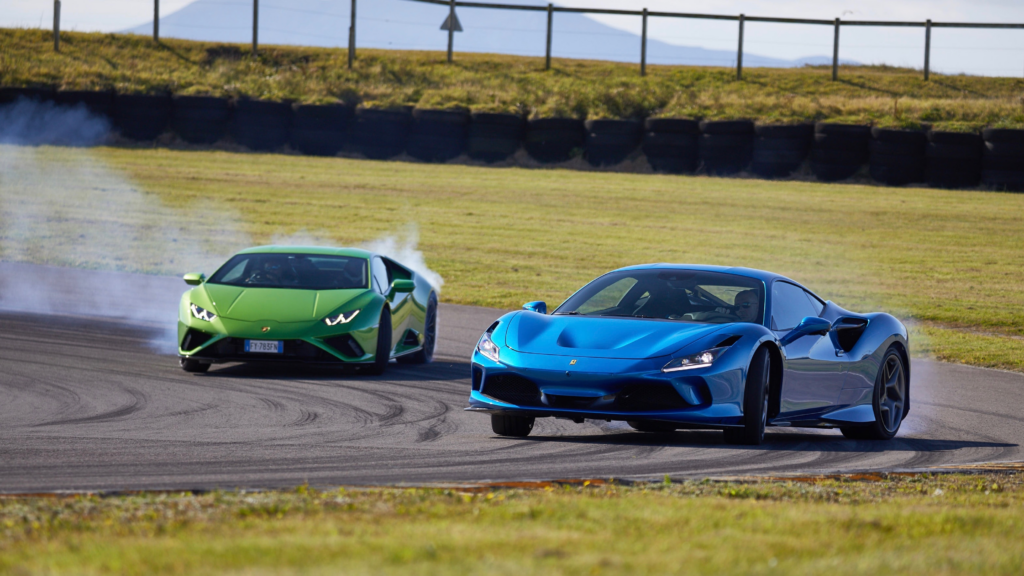
The Lamborghini versus Ferrari rivalry extends far beyond mechanical specifications and lap times. It is fundamentally a clash of design ideologies that reflects the very souls of the companies. Lamborghini’s design language is characterized by its bold, angular lines, often described as having a spaceship-like quality. From the legendary Countach to the modern Aventador and Huracán, their vehicles scream for attention, designed to shock and awe. They are automotive sculptures that demand admiration for their sheer audacity.
Ferrari, on the other hand, leans toward flowing lines and a more elegant, refined form of aggression. From the iconic 288 GTO to the modern F8 Tributo, their design language is centered on sleek dominance and aerodynamic refinement. Ferrari’s cars are often described as silent assassins, possessing a quiet, focused power that is subtly expressed through their lines.
In essence:
Lamborghini is defined by shock and awe. It is raw, untamed, and visually arresting.
Ferrari embodies grace and aggression. It is refined, powerful, and elegant.
This fundamental difference in approach means that Lamborghini versus Ferrari offers two distinct aesthetic experiences. One is a flamboyant declaration of intent, the other is a statement of refined power. This distinction is what makes the debate so compelling for automotive enthusiasts.
The Race That Never Was: Track Domination Versus Street Supremacy
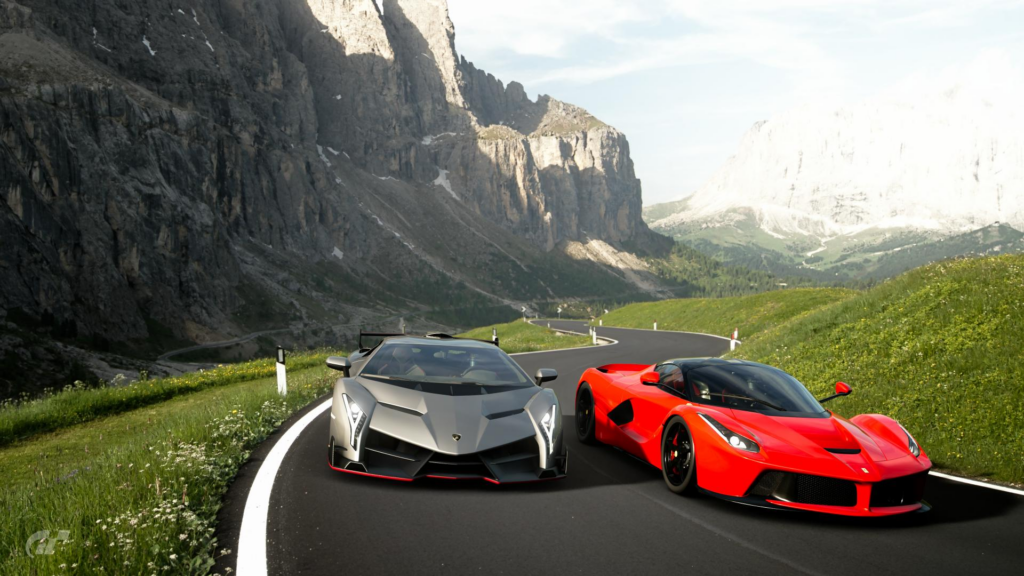
While Lamborghini and Ferrari have never directly faced off in a head-to-head competition on the track, that doesn’t mean the rivalry ended. In fact, it continues to be one of the most intense dynamics in the industry. Traditionally, Ferrari has always been the undisputed titan of motorsport, with a legendary presence and history in Formula 1 racing. Their racing pedigree is ingrained in their DNA, and every road car they build carries the legacy of the track.
Meanwhile, Lamborghini has traditionally focused on manufacturing luxury performance street cars. Their primary goal has been to create vehicles that dominate the road with brute force and stunning aesthetics. While they have participated in racing, their heart has always been on the boulevard and the highway.
The fact remains: Ferrari dominates the track, and Lamborghini rules the streets. This distinction is a key part of the Lamborghini versus Ferrari debate. One offers the thrill of a professional racer, the other the exhilaration of a road-legal rocket ship.
Technological Arms Race: V12 Roars and Carbon Fiber Wars
Both brands are perpetually testing the boundaries of what a car can be. They are locked in a ceaseless technological arms race, constantly pushing the envelope of performance and innovation.
Take the Ferrari SF90 Stradale, a plug-in hybrid supercar that pushes past the 1,000-horsepower mark with the help of advanced electronics and racecar-derived dynamics. It represents Ferrari’s commitment to blending extreme performance with cutting-edge technology.
On the other hand, Lamborghini counters with the Revuelto, a hybrid V12 powerhouse with a design that is intentionally over-the-top and acceleration that is frankly frightening. The experience of driving a Revuelto is visceral, overwhelming, and unforgettable. There is truly nothing that compares to the sound, the power, and the presence of a modern Lamborghini.
In this ongoing battle, the companies are playing for keeps. Whether it’s through faster lap times, quicker acceleration, or more advanced technology, both brands are locked in an automotive arms race to redefine speed and performance. This technological competition is a crucial element of the Lamborghini versus Ferrari rivalry.
The Evolution to Hybridization
In the current era of electric vehicles and sustainability, both brands are evolving without sacrificing their core identities. Lamborghini is embracing hybridization with the Revuelto, ensuring their powerful V12 heritage continues with enhanced efficiency. They are also exploring fully electric options, but always with a focus on performance and excitement.
Ferrari is leading the charge with the SF90, integrating advanced hybrid technology into their lineup. Their upcoming electric vehicles promise the performance and exclusivity that enthusiasts expect. These adaptations demonstrate that Lamborghini versus Ferrari is not afraid of the future; they are actively shaping it, proving that electrification does not mean sacrifice.
The Sound of Speed: V10 Roar Versus V8 Screech
No discussion of Lamborghini versus Ferrari would be complete without addressing the soundtrack of these machines. The sound of a high-performance engine is an integral part of the driving experience, and these two brands offer distinctly different auditory pleasures.
The V10 and V12 engines of a Lamborghini, like the Huracán or Aventador, roar like a wild beast. The sound is thunderous, commanding attention from miles away. These sound profiles are loud, guttural, and visceral.
Ferrari, conversely, often produces a higher-pitched, more refined scream, reminiscent of an opera. While certainly loud, the Ferrari’s sound is more precise and controlled. It has a different kind of intensity—less about brute force and more about controlled aggression. The roar of a Ferrari may often be heard from behind as it approaches, rather than at full volume from the front. Ferrari’s sound more closely resembles a quiet predator, a tiger stalking its prey; it is powerful, but its presence is often not noticed until it is too late.
Ultimately, there is no definitive winner in this auditory battle. Some enthusiasts prefer the raw, earth-shaking roar of a Lamborghini, while others prefer the precise, high-frequency symphony of