




The Ultimate Supercar Showdown: Lamborghini vs. Ferrari
A Duel of Titans: The Rivalry That Defined the Supercar Era
For nearly seven decades, the automotive world has been captivated by a rivalry that transcends mere competition. It is a saga of ego, innovation, and unbridled passion—a battle etched into the very DNA of engineering and design. The war of the supercars has rarely offered a clear victor, but rather a constant evolution that has pushed the limits of human ingenuity. From the sun-drenched streets of Modena to the sleek showrooms of the 21st century, the Lamborghini vs Ferrari debate continues to ignite fierce passions among enthusiasts worldwide.
This is not just a comparison of horsepower or top speed. It is a clash of philosophies. It is the story of how two visionary founders, propelled by pride and a shared vision of perfection, inadvertently forged the most iconic feud in automotive history. While many see a simple rivalry, it is, in fact, a complex tapestry of revenge, ambition, and an unwavering commitment to crafting machines that inspire awe.
Genesis of a Legend: When Pride Met Passion
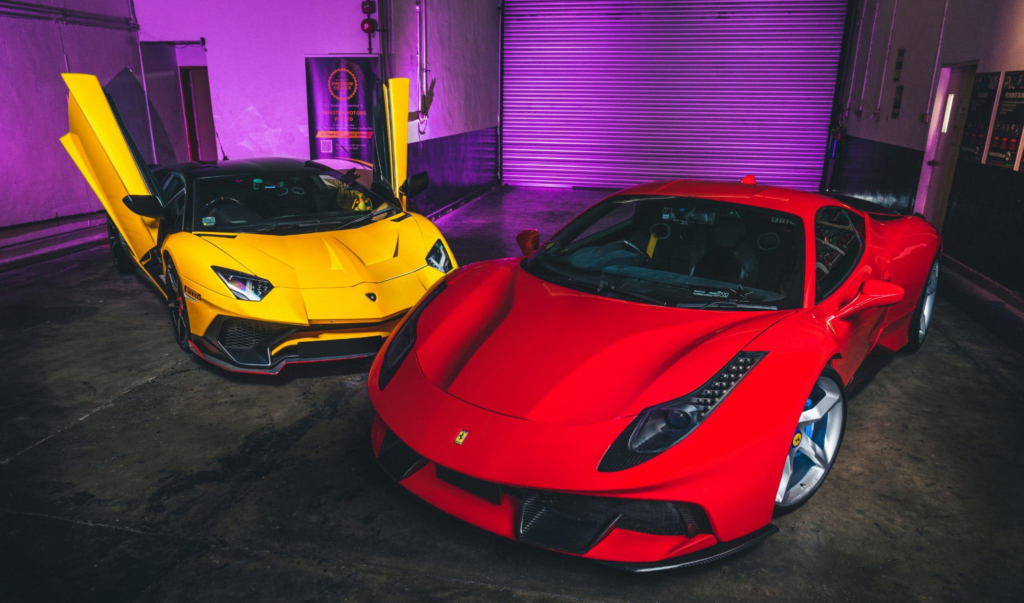
The roots of this legendary conflict trace back to the early 1960s, a period when the Italian automotive landscape was dominated by a single name: Ferrari. Enzo Ferrari’s reputation was built on the bedrock of racing success and uncompromising performance. His cars were not just modes of transportation; they were embodiments of Italian racing heritage.
However, not everyone was satisfied with the red perfection. Enter Ferruccio Lamborghini, a man whose success in the agricultural machinery industry had granted him the means to indulge in his passion for luxury automobiles. Lamborghini owned several Ferraris, but he found himself increasingly frustrated with their performance, particularly with the clutch system. Where others saw perfection, Lamborghini saw opportunity—or perhaps, a personal affront.
Like any man of pride and mechanical aptitude, Lamborghini did not shy away from expressing his concerns. He took his complaints directly to the source: Enzo Ferrari himself. The response, reportedly, was less than encouraging. Enzo, ever the purist and the gatekeeper of his exclusive world, allegedly dismissed Lamborghini’s concerns, declaring that he could drive a tractor but would never drive a Ferrari.
This legendary dismissal was the catalyst. Fueled by pride and a profound sense of indignation, Ferruccio Lamborghini made a decision that would alter the course of automotive history. If Ferrari could not meet his standards, he would build cars that exceeded them. Thus, in 1963, the House of the Raging Bull was born, not just as a new car manufacturer, but as a direct challenge to the established throne of Ferrari.
The Unveiling: Miura vs. Daytona
The world first witnessed the full force of this rivalry in 1966, when Lamborghini unveiled the Miura. With its low-slung silhouette, wide stance, and radical mid-engine layout, the Miura was unlike anything the world had ever seen. It was a rolling revolution—a machine that redefined the very concept of a supercar. Its design was breathtaking, its performance exhilarating, and its presence undeniable.
Ferrari, while initially caught off guard, responded with the 365 GTB/4 Daytona. While the Daytona was a masterpiece of engineering, characterized by its traditional front-engine design and pure racing lineage, it was fundamentally rooted in tradition. The Miura, however, represented a dramatic shift in paradigm. It was not just a fast car; it was a statement of intent. It set a new standard for what a sports car could be, forcing Ferrari to re-evaluate its approach to design and performance.
The Lamborghini Miura solidified the company’s place in the supercar hierarchy. Its disruptive design and performance capabilities demonstrated that Lamborghini was not just a competitor; it was a revolutionary force. It showcased the bold, uncompromising spirit that would define the brand for decades to come, setting the stage for the high-octane drama that would follow.
A Clash of Titans: Design Philosophies
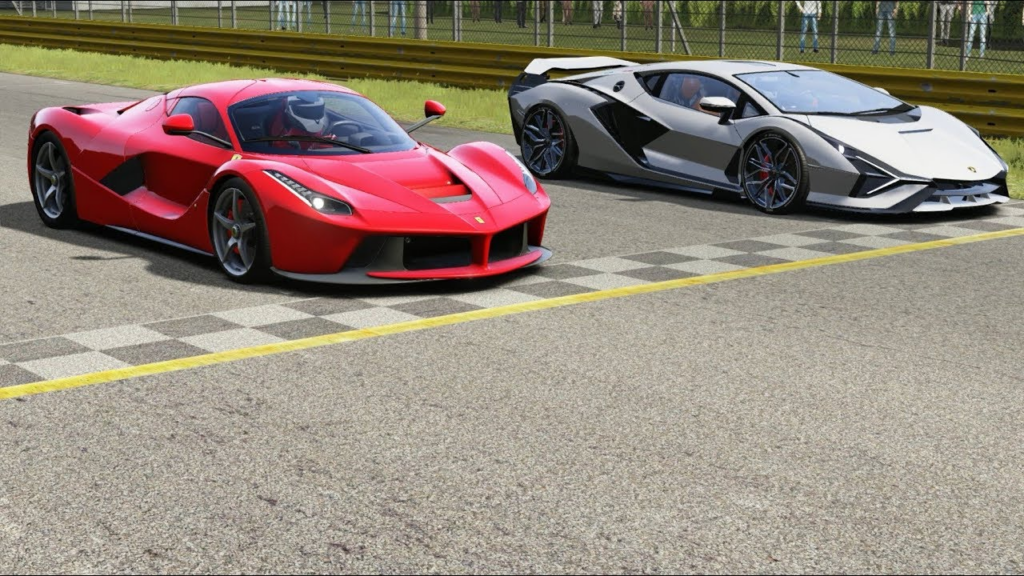
The Lamborghini vs Ferrari rivalry extends far beyond the realm of engineering; it is a fundamental conflict of design ideologies. Lamborghini’s design language is characterized by a bold, angular aesthetic that evokes a sense of raw power and aggression. From the iconic Countach to the modern Aventador and Huracán, Lamborghini’s vehicles scream for attention. They are machines built to be seen, admired, and feared. Their design is often described as predatory, muscular, and unapologetically aggressive.
Ferrari, on the other hand, leans towards flowing lines, sculpted forms, and elegant aggression. From the classic lines of the 288 GTO to the refined beauty of the F8 Tributo, Ferrari’s design is a masterclass in aerodynamic sophistication and timeless elegance. The company prioritizes a design that is both breathtakingly beautiful and aerodynamically efficient, creating a harmonious balance between form and function.
The dichotomy is stark:
Lamborghini – Shock and Awe: A bold, aggressive, and uncompromising design that demands attention. Their cars are often described as spaceships made for Earth, unapologetically wild and provocative.
Ferrari – Grace and Aggression: A refined, elegant, and aerodynamic design that embodies speed, passion, and sophistication. Their cars are often described as silent assassins, powerful yet graceful.
Design-wise, Lamborghini is the show-off, the flamboyant exhibitionist who thrives in the spotlight. Ferrari, in contrast, is the silent assassin, the predator that moves with precision, power, and deadly elegance. This contrast is not accidental; it is a deliberate reflection of the two brands’ distinct philosophies.
The Race That Never Was, Yet Never Ended
While both brands are legendary in their own right, they have rarely faced off head-to-head in direct competition. Ferrari’s legacy is inextricably linked to motorsport, particularly Formula 1, where the brand has achieved unparalleled success. The prancing horse has dominated the track for decades, becoming synonymous with the pinnacle of racing excellence.
Lamborghini, on the other hand, was born out of a desire to conquer the streets. Ferruccio Lamborghini’s vision was to build luxury performance sports cars that could rival the best in the world. While the company has dipped its toes into racing, its primary focus has always been on creating road-legal machines that blend performance with luxury and style.
However, the absence of direct track confrontations does not diminish the intensity of this rivalry. It continues to burn fiercely, driven by innovation, competition, and the passion of their respective fan bases. While Ferrari dominates the track, Lamborghini continues to rule the streets, creating machines that push the boundaries of automotive engineering.
The Tech Arms Race: V12 Roars and Carbon Fiber Wars
In the relentless pursuit of speed and performance, both brands are constantly pushing the boundaries of automotive technology. The competition is fierce, with each brand seeking to outdo the other in terms of power, speed, and innovation.
Consider the Ferrari SF90 Stradale, a groundbreaking plug-in hybrid supercar that combines a twin-turbo V8 engine with three electric motors, delivering a staggering 1,000 horsepower. Its advanced hybrid architecture and race-car-first racecraft represent a significant leap forward in automotive technology.
Lamborghini, meanwhile, has responded with the Lamborghini Revuelto, a hybrid V12 supercar that boasts a breathtaking design and mind-boggling acceleration. The Revuelto is a testament to Lamborghini’s commitment to pushing the boundaries of performance, proving that hybrid technology can be as exhilarating as traditional powertrains.
This is an automotive arms race where the stakes are measured in fractions of a second. From the precision of Ferrari’s lap times to the brutal acceleration of Lamborghini’s launch control, the companies are locked in a perpetual battle to redefine speed and redefine what a supercar can achieve.
The Soundtrack of a Rivalry: Who Sounds Better?
For automotive enthusiasts, few debates are as passionate as the question of which brand produces the better engine sound. The V10 and V12 engines of Lamborghini’s Huracán and Aventador roar like lions in the jungle, a guttural, mechanical symphony that can be heard for kilometers. These are loud, unadulterated sounds of power and aggression.
Ferrari, on the other hand, produces a more refined, high-pitched shriek, reminiscent of a high-octane opera. While the sound is still powerful, it is characterized by precision and elegance. Lamborghini’s sound waves will shake the earth beneath you, while the Ferrari will only be heard as a distant echo after it has passed.
The Ferrari sounds like a quiet predator, a tiger stalking its prey—silent until the moment it strikes. The Lamborghini sounds like a roaring beast, a predator unleashed upon the world. There is no real winner in this debate; it is a matter of personal preference. Some love the ass-kicking roar of the Lambo, while others prefer the precise, melodic precision of the Ferrari.
New Competitors, New Eras
In the current era of electric vehicles, both brands are adapting themselves to this paradigm shift without losing their iconic soul. Lamborghini is focusing on hybrid technology while looking toward a fully electric future, while Ferrari continues to innovate with hybrid powertrains while developing its first electric model.
Upcoming Lamborghini Cars in the EV segment in 2025:
Revuelto PHEV V12: A powerful hybrid V12 that represents Lamborghini’s bold new direction.
Huracán Replacement (Hybrid): A performance-oriented hybrid that replaces the legendary Huracán.
Urus PHEV: A high-performance plug-in hybrid SUV that combines luxury and efficiency.
Upcoming Ferrari Cars in the EV segment in 2025: