




The Evolution of a Rivalry: Lamborghini vs. Ferrari – A Century of Speed, Soul, and Strategy
In the pantheon of automotive luxury and performance, few rivalries captivate the imagination quite like Lamborghini versus Ferrari. This is not merely a competition between automobile manufacturers; it is a clash of philosophies, a historical feud sparked by pride, and a legendary battle that continues to define the pinnacle of Italian engineering. For those seeking to understand the complex dynamics of the modern supercar market, comprehending the genesis of this conflict is not just illuminating—it is essential for navigating luxury car investments and understanding the competitive landscape of high-performance vehicles.
At the heart of this automotive saga stands Enzo Ferrari, the founder of the Scuderia and the man who transformed racing passion into a global automotive empire. His relentless pursuit of perfection established Ferrari as the benchmark for speed and exclusivity. But this empire was not built without its critics, and one in particular would challenge the very foundation of Maranello. Enter Ferruccio Lamborghini, a man of industrial might and uncompromising standards, who saw not just a car, but a vision of what could be. This deep-dive analysis explores the history, the technical evolution, the economic factors, and the strategic decisions that shaped this ongoing feud, offering a comprehensive perspective for enthusiasts, investors, and industry insiders.
The Genesis of the Conflict: A Personal Vendetta
The story of the Lamborghini vs. Ferrari rivalry begins not in a corporate boardroom or on a racetrack, but in the workshop of a successful industrialist. In the early 1960s, Ferruccio Lamborghini, already renowned for his production of tractors and agricultural machinery, acquired several Ferrari road cars. While he admired the performance, he found them lacking in the precision and refinement he demanded from his own engineering. Dissatisfied with the clutch mechanism—a notorious point of failure in early Ferraris—Lamborghini felt the engineers were not listening to his concerns.
The turning point came during a personal visit to Enzo Ferrari. The legend holds that Lamborghini presented his criticisms directly to the founder, only to be dismissed with the now-infamous retort that a farmer could never understand the intricacies of a high-performance sports car. This dismissive attitude, as history shows, was the catalyst. Fueled by professional pride and a desire to prove his detractors wrong, Ferruccio Lamborghini decided to build a car that would not only rival Ferrari but eclipse it in every conceivable way. He resolved to create a vehicle that married ferocious power with sophisticated design, a machine that could dominate the streets and challenge the dominance of the prancing horse. This personal slight ignited a competitive fire that would define the industry for generations.
A Clash of Ideologies: Tradition vs. Innovation
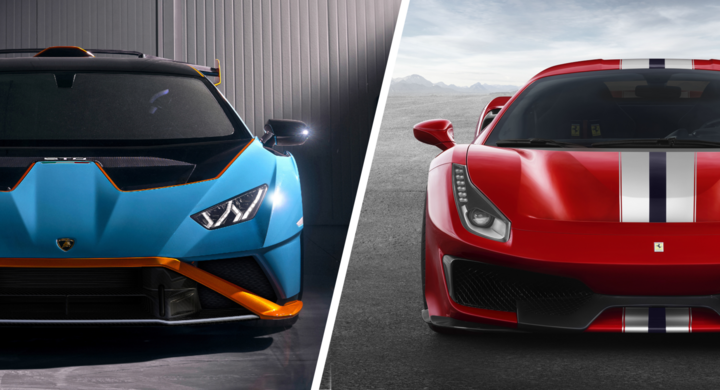
To understand the enduring appeal of the Lamborghini vs. Ferrari comparison, one must appreciate the fundamental differences in the philosophies that underpin each brand. Enzo Ferrari, deeply rooted in the world of Formula 1 and GT racing, viewed his road cars as extensions of his racing machines. His philosophy was one of heritage, passion, and the purity of mechanical engineering. Ferrari cars were designed to be driven hard, with the engine placed at the front, a traditional layout that prioritized balance and durability for long-distance racing. The focus was on the visceral experience—the roar of the naturally aspirated engine, the raw feedback through the steering wheel, and the legacy of champions who had driven them.
In contrast, Ferruccio Lamborghini’s vision was revolutionary. He sought to create something entirely new, a car that pushed the boundaries of design and engineering. His first production car, the 350 GT, was a bold statement of intent, featuring a V12 engine and a sleek design that foreshadowed the radical direction he would take. Lamborghini’s philosophy centered on innovation, luxury, and performance that shocked the world. He embraced modern materials like aluminum and later carbon fiber, and pioneered the mid-engine layout that would become the standard for future supercars. This divergence in approach—Ferrari’s respect for tradition versus Lamborghini’s hunger for innovation—created a rivalry that was as much about philosophical differences as it was about technical superiority.
Evolution of the Fleet: From Icons to Hybrids
The evolution of Lamborghini and Ferrari’s product lines offers a fascinating glimpse into their ongoing competition. The early years were defined by landmark models that established the brands’ reputations. For Ferrari, the Daytona (365 GTB/4) was the epitome of front-engined grand touring, a car celebrated for its elegant lines and blistering speed. Lamborghini’s response was the Miura, a mid-engined masterpiece that revolutionized automotive design and set a new standard for performance and aesthetics. Its dramatic styling and groundbreaking engine placement transformed the perception of what a supercar could be.
As technology progressed, both companies continued to innovate. The 1980s saw the rise of the wedge-shaped designs of the Countach and Testarossa, iconic models that symbolized excess, speed, and futuristic aesthetics. The 1990s introduced Ferrari’s F50 and Lamborghini’s Diablo, each pushing the envelope of performance in their respective eras. This technical rivalry continued into the 21st century, with both brands developing advanced hybrid powertrains and lightweight composite materials.
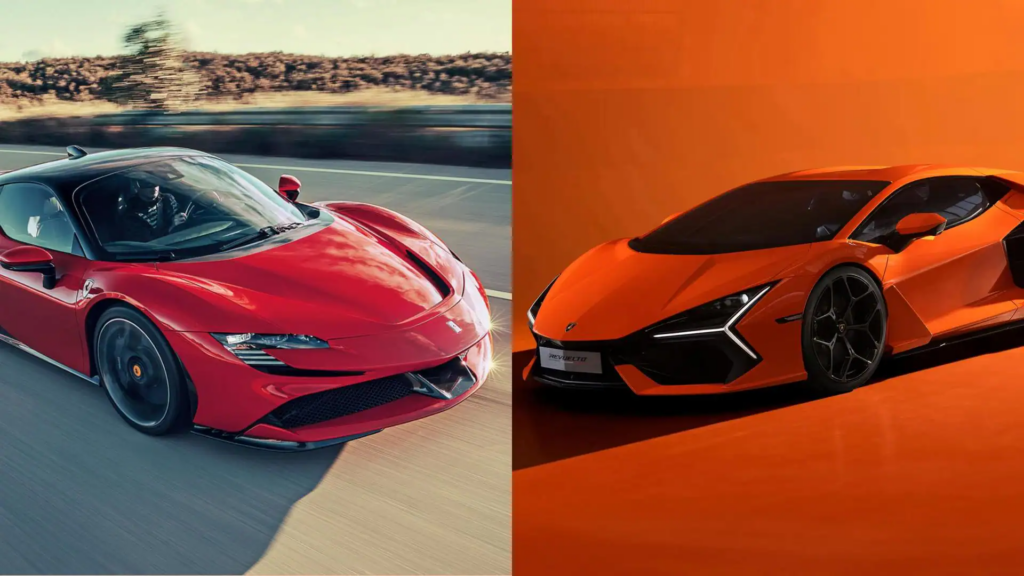
Today, the Lamborghini vs. Ferrari comparison extends into the realm of electrification and sustainable mobility. Both companies are navigating the transition to electric vehicles (EVs) without sacrificing the performance and emotional appeal that define their brands. Lamborghini’s Revuelto, a hybrid V12 powerhouse, and Ferrari’s SF90 Stradale demonstrate their commitment to cutting-edge technology, while their upcoming EV initiatives signal their adaptation to a changing market. This continuous technological competition ensures that the debate over which brand is superior remains relevant and dynamic.
The Business of Luxury: Marketing, Scarcity, and Exclusivity
Beyond the technical specifications and performance metrics, the Lamborghini vs. Ferrari rivalry is also a fascinating study in marketing and brand strategy. Both companies operate in the ultra-luxury segment, where exclusivity is as valuable as speed. However, their approaches to achieving this exclusivity differ significantly.
Ferrari, with its deep roots in racing, leverages its legendary Formula 1 history to cultivate an aura of prestige. The brand cultivates a sense of heritage and entitlement among its customers. Owning a Ferrari is not just about buying a car; it is about joining an exclusive club that values loyalty and pedigree. Ferrari carefully controls its production volumes and often restricts access to certain models to qualified buyers, maintaining a level of mystique that enhances its desirability. For those seeking to invest in luxury automotive assets, understanding Ferrari’s exclusive distribution model is crucial.
Lamborghini, on the other hand, operates with a different philosophy. While also maintaining exclusivity, Lamborghini is more approachable for those seeking raw performance and audacious design. The brand positions itself as the disruptor, the choice for those who want to stand out from the crowd. Its marketing often focuses on bold aesthetics, aggressive performance, and a sense of adventure. While both brands command high prices and demand significant investment, Lamborghini appeals to a segment of the market that prioritizes attention-grabbing style and extreme performance above legacy.
In the highly competitive luxury automotive market, the Lamborghini vs. Ferrari competition serves as a strategic benchmark. The companies compete for the same high-net-worth individuals, but they target different psychological profiles. Ferrari appeals to those who value history and prestige, while Lamborghini attracts those who desire innovation and spectacle. For investors in the high-end automotive sector, understanding these nuances is critical for positioning themselves in the market.
Design Philosophy: Sharp Lines vs. Sculptural Form
The aesthetic differences between Lamborghini and Ferrari are perhaps the most visible aspect of their rivalry. Each brand has developed a distinct design language that reflects its core philosophy.
Lamborghini is known for its angular, aggressive, and futuristic designs. The Countach and Aventador are iconic examples of this sharp, wedge-like styling that evokes a sense of raw power and mechanical aggression. Lamborghini cars are designed to turn heads and demand attention, reflecting the brand’s commitment to innovation and spectacle. For enthusiasts seeking a car that makes a bold statement, Lamborghini’s design language offers a unique blend of drama and performance.
Ferrari’s design language is characterized by flowing lines, elegance, and organic curves. Cars like the F8 Tributo and the Roma exude a sense of refined aggression and classic Italian artistry. Ferrari’s design philosophy emphasizes aerodynamic efficiency and sculptural beauty, a reflection of the brand’s racing heritage and commitment to timeless elegance. While both brands produce stunning vehicles, Lamborghini’s design often leans towards the avant-garde, while Ferrari’s remains rooted in classic Italian styling.
For collectors and investors in the automotive market, understanding these design differences is important for discerning value and appreciating the long-term appeal of these vehicles. The visual identity of each brand has become a significant factor in its market value, as collectors seek out cars that represent the zenith of automotive design from their respective eras.
Strategic Moves and Market Positioning
In the contemporary automotive landscape, both Lamborghini and Ferrari are making strategic moves to ensure their continued relevance in a rapidly evolving market.
Lamborghini has successfully diversified its product portfolio with the Urus SUV, which has proven to be a commercial success and has helped the brand expand its reach beyond traditional supercar enthusiasts. The company is also investing heavily in hybrid and electric technologies, ensuring that it remains at the forefront of performance engineering while addressing environmental concerns.
Ferrari, also embracing electrification, continues to build on its legacy as a leader in motorsport and luxury automotive performance. The company’s focus on V12 engines and high-performance hybrids ensures that it continues to offer the exhilarating experience that defines the brand. Ferrari’s strategic decisions reflect a commitment to maintaining its position as the benchmark for automotive prestige.
For those interested in automotive investments, the strategic moves of both companies offer valuable insights into the evolving dynamics of the luxury market. As consumer preferences shift towards SUVs and electric vehicles, understanding how these traditional