




The Insatiable Rivalry: Lamborghini vs. Ferrari in 2026
The roar of the V12 has echoed through the halls of automotive history for decades, a symphony of engineering prowess and unadulterated passion. In the hallowed ground of the Italian supercar landscape, few rivalries command the same reverence and debate as that between Lamborghini and Ferrari. This is not merely a comparison of two high-octane machines; it is a chronicle of egos, ideologies, and a battle fought not just on the racetrack, but in the soul of every petrolhead.
For those navigating the high-stakes supercar market, understanding the subtle yet significant differences between these titans is paramount. This premium car comparison moves beyond specs and horsepower to explore the very fabric of what makes each brand unique, helping potential buyers make an informed decision in today’s dynamic auto industry. Whether you are seeking the raw, untamed fury of a raging bull or the refined, aggressive elegance of a Prancing Horse, the journey into the heart of Lamborghini vs Ferrari is essential for the discerning collector.
The genesis of rivalry: From tractor to supercar
Every epic rivalry has a humble beginning, and the clash of Lamborghini vs Ferrari is no exception. It is a story steeped in pride, engineering tenacity, and a touch of automotive drama that could be pulled straight from the silver screen.
Ferruccio’s Grievance: The Humble Tractor
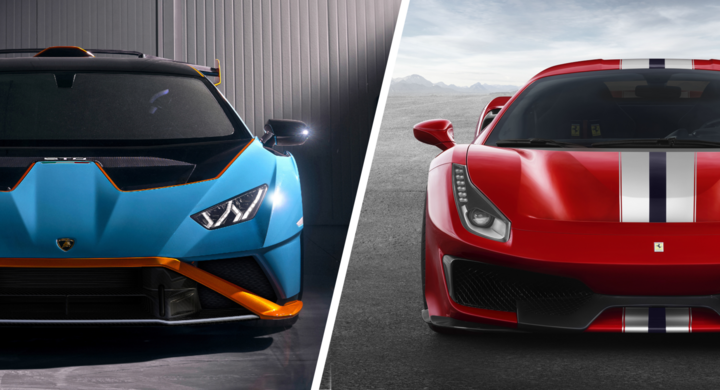
The year is the early 1960s. Ferruccio Lamborghini, the founder of Lamborghini Trattori, was a man who understood engines better than most. He was a pragmatist, an innovator, and a man of refined taste who also happened to be a proud owner of several Ferrari vehicles. However, his admiration was tempered by frustration. Lamborghini found himself increasingly dissatisfied with the technical nuances of his Ferraris, particularly the clutches, which often felt less refined than he believed they should be for their astronomical price.
Like any Italian with a passion for machinery and a strong sense of self-worth, Ferruccio decided to take his concerns directly to the source. He approached Enzo Ferrari, the legendary founder of the Scuderia, with his technical critiques. However, Enzo, already established as the undisputed king of motorsport and a man known for his uncompromising vision, was not receptive to criticism from a man he considered an outsider—a tractor manufacturer, nonetheless.
It is widely reported that Enzo famously dismissed Lamborghini, suggesting that someone who was content to drive a tractor should never aspire to operate a Ferrari. This dismissal, whether apocryphal or not, was the spark that ignited one of the most enduring rivalries in automotive history.
The Birth of the Bull: A Challenge to the Throne
For Ferruccio Lamborghini, Enzo’s words were not just insulting; they were a direct challenge to his competence and ambition. Instead of being deterred, Lamborghini was galvanized. He decided that if Ferrari would not build a car that met his rigorous standards of performance, beauty, and comfort, he would build one himself. And he would build one that would not just compete with Ferrari, but surpass it.
In 1963, the Automobili Lamborghini was born. This was more than just a new company; it was a direct declaration of war. Lamborghini set out to build not just fast cars, but automotive masterpieces that blended raw power with unparalleled luxury. The Lamborghini Miura emerged in 1966, a revolutionary machine that turned heads and redefined the supercar paradigm. It was low, wide, and featured a mid-engine layout that gave birth to what we now know as the modern supercar.
Ferrari, forced to respond to this unexpected threat, introduced the Ferrari Daytona, a powerful front-engined V12 GT that marked a classic response to Lamborghini’s radical innovation. The stage was set for a battle that would forever etch itself into the luxury car market.
Lamborghini vs Ferrari: A Battle of Ideologies
The Lamborghini vs Ferrari rivalry is defined by more than just their performance capabilities. It is a clash of fundamental design philosophies, engineering approaches, and market positioning. For anyone considering buying a supercar, understanding these differences is the first step toward making the right choice.
Design Language: Sharp vs. Sleek
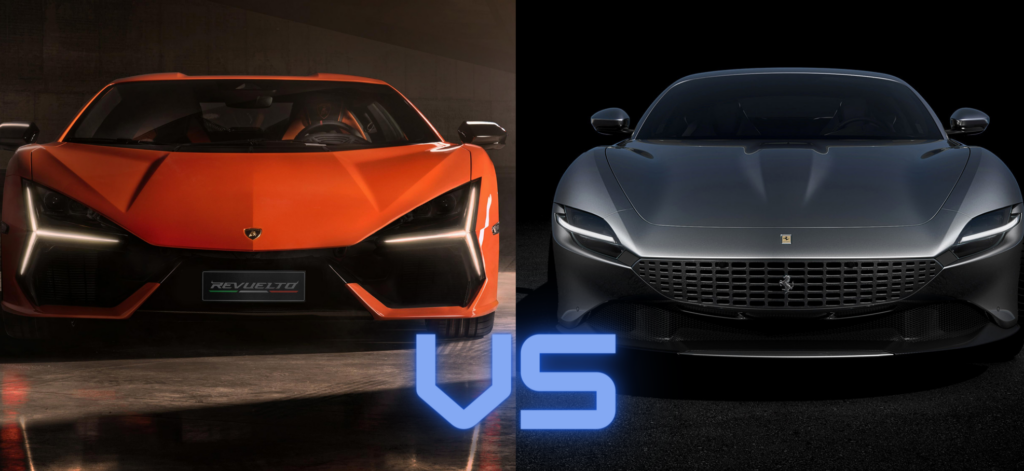
The visual aesthetics of these two brands serve as the most immediate indicator of their contrasting ideologies.
Lamborghini: The automotive world often describes Lamborghini’s design language as sharp, angular, and aggressive. Think of the Countach, the Aventador, and the Huracán. These cars are designed to command attention, featuring bold lines, fighter jet-inspired aerodynamics, and a stance that suggests brute force and rebellion. A Lamborghini is designed to be seen, to start conversations, and to evoke a sense of visceral excitement even at a standstill. In the luxury automotive sector, Lamborghini is often the brand that represents shock and awe.
Ferrari: In contrast, Ferrari has historically leaned towards flowing lines and elegant aggression. From the iconic 288 GTO to the modern SF90 Stradale and 12Cilindri, Ferrari’s design philosophy prioritizes aerodynamic efficiency without sacrificing grace. Ferrari’s cars are often described as silent assassins—beautiful, refined, and deceptively fast. They embody a timeless elegance that speaks to Italian craftsmanship and heritage. In the automotive market, Ferrari represents a fusion of high performance with sophisticated luxury.
The Race Track vs. The Road
While both brands engage in motorsport, their core identities are defined by their primary focus.
Ferrari: Ferrari dominates the track with a racing heritage that is legendary. The Scuderia Ferrari is one of the most recognized names in motorsport, particularly in Formula 1, where they have achieved more championships than any other team. This legacy of racing success has always influenced Ferrari’s street cars. They are often designed with track performance in mind, featuring race-derived technology and a driving experience that mirrors that of their Grand Prix predecessors. For many collectors, a Ferrari is the embodiment of racing heritage and automotive legacy.
Lamborghini: Lamborghini rules the streets. While the company has participated in motorsports, its primary focus has always been on producing luxury performance street cars that offer thrilling experiences for drivers on public roads. Lamborghinis are known for their dramatic styling and powerful engines, designed to make a statement wherever they go.
Technology and Innovation: A Continuous Arms Race
Both brands are locked in a tech rivalry, constantly pushing the boundaries of what a car can be.
Ferrari: Ferrari has embraced electrification with models like the SF90 Stradale, a 1,000-horsepower plug-in hybrid supercar that integrates advanced electronic systems and race-car-first engineering. With upcoming models like the Ferrari EV (expected late 2025) and the 12Cilindri Spider, Ferrari demonstrates a commitment to pushing the limits of performance engineering while maintaining its signature elegance and driving dynamics.
Lamborghini: Lamborghini responded with the Revuelto, a hybrid V12 that pairs stunning, over-the-top design with ferocious acceleration. The Huracán Replacement (Hybrid) and the Urus PHEV reflect Lamborghini’s strategy to integrate advanced technology into their lineup while preserving their bold aesthetic and visceral driving experience. This focus on cutting-edge technology ensures that Lamborghini remains competitive in the evolving automotive landscape.
Sound Engineering: The V12 Symphony vs. The Screaming V10
Perhaps one of the most passionate debates among fans is the soundtrack of a rivalry. Both brands have signature engine notes that are instantly recognizable and deeply emotional.
Lamborghini: The V10 and V12 engines in the Huracán and Aventador are often described as roaring like a lion—a deep, guttural sound that can be heard from miles away. These notes are often loud, visceral, and untamed, embodying the raw power of the engine.
Ferrari: Ferrari’s engines, such as those in the F40 or the Roma, typically emit a higher-pitched screech that evokes the precision of a symphony. While still powerful, Ferrari’s sound is often described as more controlled and refined, less like a primal roar and more like the controlled aggression of a high-performance machine.
Ultimately, the choice between Lamborghini vs Ferrari regarding sound is a matter of personal preference. Some prefer the earthy, thundering roar of the Lamborghini, while others appreciate the finely tuned harmonics of the Ferrari. There is no right or wrong answer—only the sound that resonates most deeply with the driver.
The Financial Implications: Cost, Value, and Ownership
For anyone in the luxury car market, buying a supercar involves significant financial considerations. Both brands occupy the pinnacle of automotive excellence, and as such, the cost of ownership is substantial.
Ferrari Pricing: Premium Performance, High Investment
Ferrari pricing reflects the brand’s legacy of exclusivity, racing heritage, and performance engineering.
12Cilindri Spider: Starts around $9.15 Cr in India, positioning it as a top-tier V12 offering.
SF90 Spider: With a price around $7.5 Cr in India, this hybrid supercar offers a blend of cutting-edge technology and track-ready performance.
Ferrari EV (Expected Late 2025): Expected to be priced well over $10 Cr, signaling Ferrari’s significant investment in the electric vehicle (EV) market.
Owning a Ferrari often requires more than just purchasing the