




The Lamborghini vs Ferrari Rivalry: A Clash of Titans in the World of Exotic Supercars
For enthusiasts of automotive engineering, performance, and design, the rivalry between Lamborghini vs Ferrari is not just a comparison of vehicles; it represents a fundamental divergence in philosophy. It is a saga woven into the fabric of the Italian automobile industry, defined by ego, innovation, and a persistent drive to outshine the other. While often discussed in hushed tones among aficionados, this storied conflict has birthed some of the most iconic luxury performance vehicles in history, forever reshaping the global supercar market.
This conflict is a microcosm of human aspiration and competition, played out on asphalt tracks and winding Italian roads. At its heart lies the story of two visionary men, whose differing temperaments and automotive visions propelled their respective marques to stratospheric heights. This deep-dive explores the genesis of this brand rivalry, the technical and aesthetic differences that define them, and how both companies navigate the increasingly electric landscape of the 21st century.
The Genesis of the Rivalry: A Tractor Manufacturer’s Vengeance
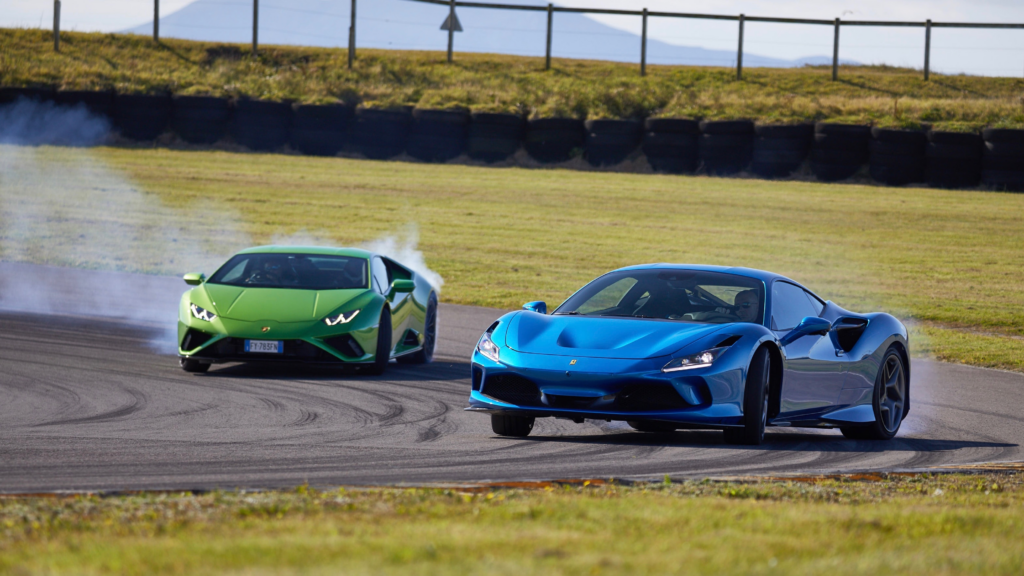
The genesis of the Lamborghini vs Ferrari saga dates back to the early 1960s, a golden age for Italian automotive design and performance. Ferruccio Lamborghini, a successful entrepreneur known for his industrial prowess—specifically his lucrative tractor manufacturing business, Lamborghini Trattori—was a man of discerning taste with a passion for high-performance cars. He was a devoted owner of several Ferraris, enjoying the status and speed they provided.
However, Lamborghini’s adoration for Ferrari was not blind. He began to experience mechanical frustrations with his vehicles, particularly concerning their clutches. As a mechanical engineer himself and a man accustomed to quality, precision, and reliability in his own machinery, these shortcomings were more than just minor inconveniences; they were an affront to his standards of engineering excellence. Lamborghini’s ambition soon transformed his disappointment into motivation. He took his complaints directly to the eponymous founder of Ferrari, Enzo Ferrari.
Enzo Ferrari, often described as proud, demanding, and occasionally dismissive of non-racing concerns, allegedly responded to Lamborghini’s technical feedback with a cutting remark. Accounts vary, but the essence of the story remains: Enzo reportedly told Ferruccio that a tractor manufacturer could never truly understand the intricacies of building a high-performance race car and that he should stick to his tractors.
This statement, whether uttered verbatim or inferred through Ferruccio’s perception, served as the catalyst. It offended Lamborghini’s pride, fueling a determination to prove Enzo wrong. In the competitive spirit of the era and driven by a desire to create a superior product, Ferruccio Lamborghini resolved to build a car that would not merely compete with Ferrari but would surpass it. This declaration of intent marked the beginning of one of the most legendary rivalries in the automotive history.
Lamborghini’s Bold Challenge to Ferrari
Ferruccio Lamborghini didn’t just want to build cars; he wanted to build the perfect car—a vehicle that combined exhilarating performance with the refinement and luxury that Ferrari was known for. He assembled a team of expert engineers and designers, including Giotto Bizzarrini and Frank Stephenson, and set about realizing his vision.
In 1963, Lamborghini’s first production car, the 350 GTV, debuted at the Turin Motor Show. While impressive, it was the subsequent production model, the 350 GT, that established the brand’s reputation for blending performance with grand touring comfort. But Lamborghini’s ambition was anything but modest. He wanted to create a car that would truly shock the world and challenge the very foundation of Ferrari’s dominance.
The result of this relentless pursuit of perfection came in 1966 with the introduction of the Lamborghini Miura. The Miura was a radical departure from the traditional automotive landscape. It was a low-slung, wide-bodied, mid-engined supercar that immediately became the gold standard for luxury performance supercars. Its design was revolutionary, its performance was breathtaking, and it effectively established the blueprint for what a modern supercar should be.
Ferrari, though dominant in racing and on the road, found itself reacting to Lamborghini’s audacity. The Miura’s success forced the company to push its boundaries, leading to the development of their own revolutionary supercars. The ensuing competition between these two titans pushed the limits of automotive engineering and exotic car design, forever altering the supercar market and the perception of what high-performance luxury vehicles could achieve.
Lamborghini vs Ferrari: A Battle of Design Philosophies
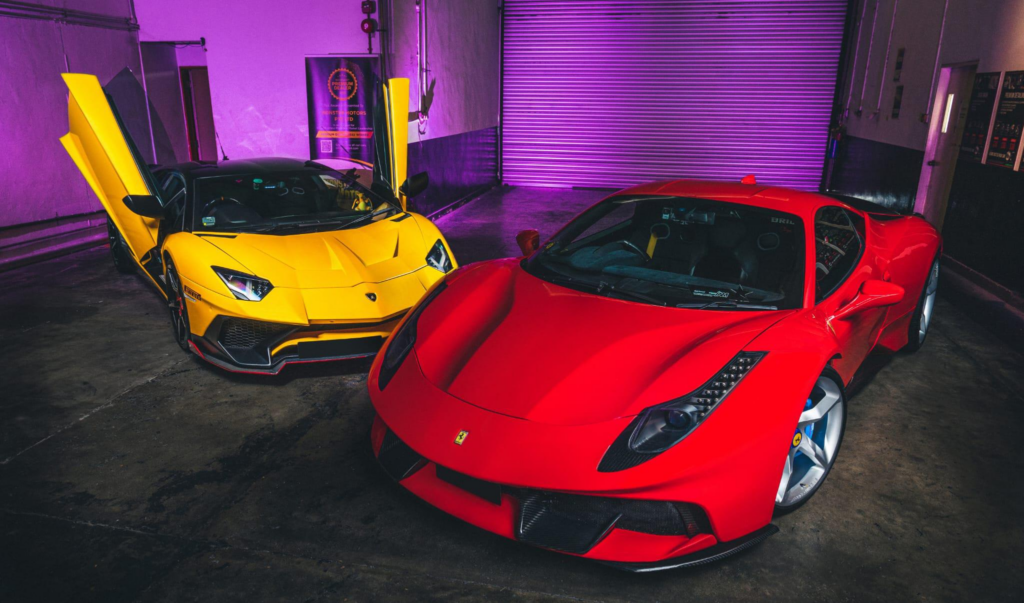
The rivalry between Lamborghini vs Ferrari extends far beyond mere performance statistics; it represents a fundamental clash of design ideologies. Both brands operate at the pinnacle of automotive engineering, but their aesthetics reflect different interpretations of power, performance, and luxury.
Lamborghini: Bold, Angular, and Aggressive
Lamborghini’s design language is characterized by its unapologetic boldness, sharp angles, and aggressive stance. From the iconic Countach to the modern Aventador and Huracán, Lamborghini’s cars scream attention. They are designed to be visually arresting, evoking a sense of futuristic aggression and raw power.
Take the Aventador, for instance. Its sharp lines, dramatic intakes, and fighter-jet-inspired canopy are designed to make a statement. It is a car that demands attention and commands respect, a rolling testament to Lamborghini’s philosophy of “shock and awe.”
Ferrari: Elegant, Fluid, and Sophisticated
Ferrari, on the other hand, leans toward flowing lines, aerodynamic sophistication, and an elegant aggression. From the classic 288 GTO to the modern F8 Tributo, Ferrari’s design is a study in sculpted perfection. While undeniably aggressive, it often conveys a sense of refined power and precision.
The 812 Superfast, for example, exemplifies Ferrari’s design philosophy with its long bonnet, sculpted flanks, and aggressive aerodynamics that manage airflow to enhance performance while maintaining a sense of harmony and grace.
Design Dichotomy: The Show-Off vs. The Silent Assassin
Ultimately, the design difference can be summarized as follows: Lamborghini is the show-off, the extrovert that craves the spotlight. Ferrari is the silent assassin, exuding confidence and precision without shouting for attention. This dichotomy has been a defining element of the Lamborghini vs Ferrari rivalry, attracting different types of clientele and shaping the supercar market.
The Race That Never Was: Track vs. Street Supremacy
While Ferrari has a storied and dominant history in Formula 1 racing, Lamborghini has historically focused on luxury performance street cars. This has led to a unique dynamic where the brands compete in different arenas, yet remain fierce rivals.
Ferrari’s legacy is deeply intertwined with the track. Its numerous wins in Formula 1 and other motorsport disciplines have solidified its reputation as a racing powerhouse. The Ferrari road cars are direct beneficiaries of this racing heritage, featuring cutting-edge technology derived from race-winning machines. This racing DNA attracts customers who value pedigree, innovation, and the thrill of the track.
Lamborghini, while occasionally venturing into motorsport, has primarily concentrated on building road-going supercars that prioritize visceral performance, aggressive design, and an exhilarating driving experience. The Lamborghini Miura was designed to conquer the streets, not just the track. The Lamborghini Aventador and Lamborghini Huracán follow this tradition, offering raw power and intoxicating performance that capture the imagination of drivers seeking the ultimate driving experience.
Fact: Ferrari dominates the track, and Lamborghini rules the streets. This distinction has been a cornerstone of their brand rivalry for decades.
Tech Rivalry: V12 Roars and Carbon Fiber Wars
The Lamborghini vs Ferrari rivalry is also a technological arms race. Both companies continually push the boundaries of automotive engineering, each introducing groundbreaking technologies that force the other to adapt.
Ferrari has long been a leader in hybrid supercar technology. The Ferrari SF90 Stradale, a 1,000-horsepower plug-in hybrid, showcases Ferrari’s ability to seamlessly integrate hybrid power with high-performance capabilities. Its advanced electronics and racecar-derived performance set a benchmark for the supercar market.
Lamborghini has responded with its own revolutionary hybrid technology. The Lamborghini Revuelto, a hybrid V12 supercar with a radical design and breathtaking acceleration, represents Lamborghini’s commitment to pushing the envelope. The company is relentless in its pursuit of speed, whether through optimized engine tuning, aerodynamic innovation, or the integration of advanced hybrid systems.
Supercar Performance Benchmarks
The technological competition between Lamborghini vs Ferrari often revolves around lap times, acceleration figures, and supercar performance metrics. Whether it is Ferrari’s precise engineering or Lamborghini’s brute-force approach, both companies are in a constant battle to redefine what a luxury performance vehicle can achieve.
Soundtracks of a Rivalry: Who Sounds Better?
One of the most debated aspects of the Lamborghini vs Ferrari rivalry is the soundtrack produced by their engines. Each brand offers a distinct sonic experience, with some preferring one over the other.
The Roar of the V10 and V12
Lamborghini’s V10 and V12 engines, such as those found in the Huracán and Aventador, produce a raw, guttural roar that can be heard from miles away. It is an unfiltered, aggressive sound that perfectly matches the car’s design and performance. The sound of a Lamborghini is often described as visceral, primal, and overwhelming.
The High-Pitched Scream
Ferrari’s engines, on the other hand, produce a high-pitched scream that resembles an opera rather than a