




The Bull vs. The Prancing Horse: An Enduring Rivalry in the World of Supercars
The automotive world is defined by a handful of names that transcend mere machines, evolving into cultural icons synonymous with speed, status, and visceral performance. Among these titans, the rivalry between Automobili Lamborghini and Ferrari stands unmatched—not simply a competition between two Italian supercar manufacturers, but a saga of ego, innovation, and automotive philosophy. This conflict, born from a singular moment of pride, has fueled a relentless drive for perfection that has shaped the very definition of a supercar for over half a century.
Genesis of the Conflict: When Ego Challenged Authority
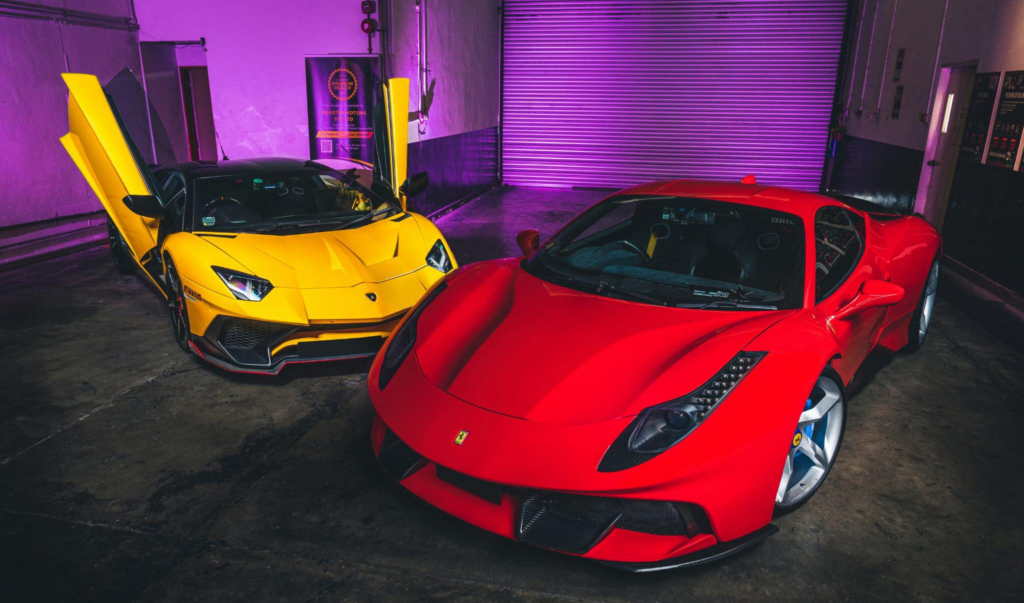
The story of the Ferrari vs. Lamborghini rivalry is a classic tale of a challenger arising from the ranks of a dissatisfied customer. In the early 1960s, Ferruccio Lamborghini, a successful entrepreneur known for his precision engineering and manufacturing prowess—most notably in the agricultural and industrial machinery sector—was already a devoted owner of several Ferrari automobiles. While he admired the engineering and the sheer performance of these Italian thoroughbreds, he became increasingly frustrated with what he perceived as fundamental flaws in the vehicles. His primary grievance centered on the transmission and clutch systems, which he felt were unsuitable for a road-going performance car, often exhibiting a roughness that bordered on mechanical brutality.
Armed with a wealth of engineering knowledge from his own industrial empire, Lamborghini sought to address these issues directly with Enzo Ferrari himself. The legend recounts that Ferruccio, a man accustomed to direct communication and pragmatic solutions, paid a visit to Enzo’s Maranello headquarters, hoping to offer his insights and perhaps suggest engineering improvements to the legendary marque.
However, Enzo Ferrari, notoriously possessive of his legacy and unforgiving of criticism, reportedly dismissed Lamborghini’s concerns with a characteristic flourish of pride. He infamously stated that a man who could successfully build and manage tractors had no business critiquing the intricacies of a high-performance racing machine. The precise words vary depending on the account, but the sentiment was unmistakable: Enzo believed Ferruccio was a mere farmer, unfit to judge the Ferrari experience.
This perceived arrogance, coupled with the sting of dismissal, ignited a spark in Ferruccio Lamborghini. Rather than backing down, he resolved to prove Enzo wrong. He decided that if the established titan of the supercar market could not deliver the performance and refinement he desired, he would build a car that would surpass it. Ferruccio’s objective was not merely to compete; it was to conquer. He envisioned a vehicle that would blend raw power with the sophistication and comfort expected by a discerning owner, fundamentally redefining the sports car industry. Thus, in 1963, Automobili Lamborghini was born, established in Sant’Agata Bolognese with the explicit mission of challenging Ferrari’s dominance.
This decision marked the beginning of one of the most enduring automotive rivalries of all time. What began as a personal slight rapidly evolved into a technological and philosophical battle. It was a clash not just of two brands, but of two diametrically opposed personalities: the industrial pragmatist turned supercar visionary and the passionate, often volatile, race car purist.
Technological Showcase: The Miura Revolution
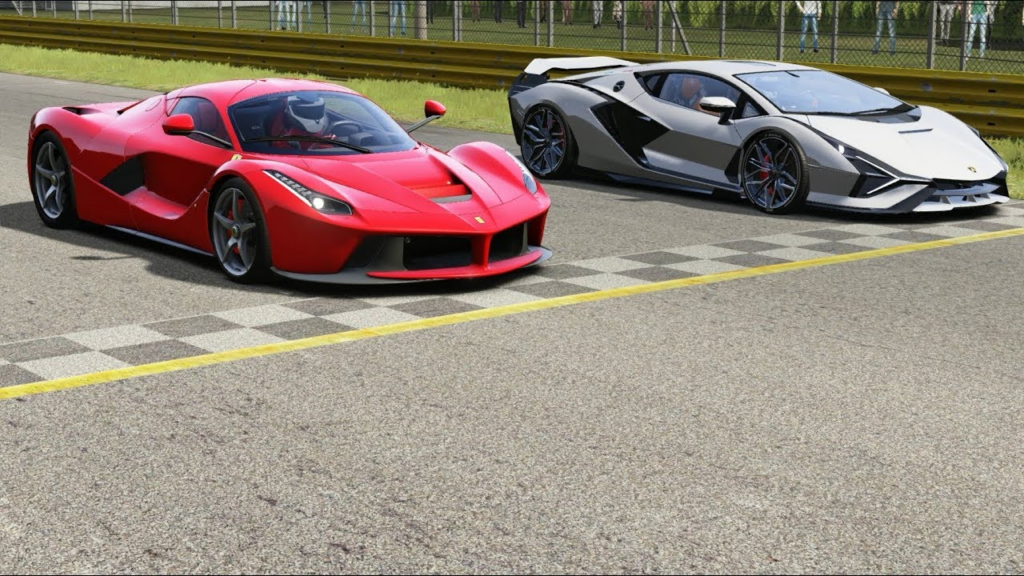
The Lamborghini Miura, unveiled to the world at the 1966 Geneva Motor Show, represented a definitive statement in this nascent conflict. The car was a radical departure from the norms of automotive design and engineering. In an era where most high-performance vehicles were front-engined, Lamborghini adopted a revolutionary mid-engine configuration. This not only provided a superior weight distribution for better handling but also allowed for a dramatically low-slung, wedge-shaped profile that seemed to defy gravity. The Miura’s appearance was nothing short of futuristic, its sleek, aerodynamic body designed not just for speed but to captivate the imagination.
The Miura was more than just a beautiful object; it was a technological tour de force. Powered by a longitudinally mounted transverse V12 engine placed just behind the driver, it delivered performance that was intoxicating. At a time when supercar technology was still evolving, the Miura was a rolling manifesto, demonstrating that Italian craftsmanship could produce beauty that was also devastatingly fast. The launch of the Miura startled the automotive world and forced Ferrari to reevaluate its strategy. It demonstrated that the future of high-performance cars lay in bold engineering and avant-garde design, a lesson that would fundamentally influence the direction of Ferrari’s own lineup in the years to come.
Ferrari’s response, the Ferrari 365 GTB/4 Daytona, was a formidable machine that celebrated the established front-engine architecture of the grand tourer. It was a powerful, stylish, and uncompromising performance car that offered exhilarating top speed and luxurious driving dynamics. However, the Miura had irrevocably shifted the goalposts. The industry had witnessed a seismic shift, and the days of exclusively front-engined V12 Ferraris were numbered. The Miura vs. Daytona debate wasn’t just about who had the faster car; it was about whether the future favored innovation or tradition, radical design or refined elegance.
A War of Aesthetics: Angular Brutality vs. Organic Curves
Beyond the specifications and performance metrics, the Lamborghini vs. Ferrari narrative is profoundly defined by their contrasting design philosophies. This aesthetic divergence serves as a visual shorthand for their underlying ideologies.
Lamborghini has always embraced a design language that is bold, aggressive, and angular. Rooted in the philosophy of “shock and awe,” the brand favors sharp lines, aggressive wedges, and dramatic proportions. The Lamborghini Countach, with its legendary scissor doors, sharp angles, and aggressive stance, embodies this philosophy perfectly. The car was designed to be outrageous, to turn heads, and to leave onlookers breathless. This design ethos continued through legendary models such as the Aventador and the Huracán, vehicles that exude a raw, unapologetic masculinity that screams for attention. For Lamborghini, design is not merely about aesthetics; it is about making a statement of raw power, dominance, and mechanical artistry. This approach is deeply influenced by the brand’s origins—born from a desire to outshine and out-modernize the existing standard.
In stark contrast, Ferrari has traditionally favored a design philosophy rooted in organic curves, sleek aerodynamics, and understated elegance. While Ferrari’s cars are undeniably fast and aggressive, their design language often communicates a sense of refinement, grace, and sophistication. From the flowing lines of the Ferrari 288 GTO to the sculpted aerodynamic forms of the F8 Tributo and the SF90 Stradale, Ferrari’s design ethos centers on precision engineering translated into fluid artistry. Ferrari represents the archetypal “gentleman’s race car”—powerful, authoritative, but always refined. The contrast is clear: Lamborghini is the showman who demands attention, while Ferrari is the silent assassin whose presence is felt before it is seen.
The Unfettered Track: A Race of Worlds
Despite their intense rivalry, Ferrari and Lamborghini have rarely met head-to-head on the racetrack. This divergence in focus is fundamental to their identities. Enzo Ferrari’s obsession was always with motorsport, specifically Formula 1. He built Ferrari to race, and the road cars were essentially extensions of his racing pedigree. Racing was the ultimate proving ground, and Ferrari’s legacy is deeply intertwined with its success in international motorsport. Today, Ferrari remains a dominant force in Formula 1, and its road cars inherit that racing heritage directly, featuring race-derived technology and track-focused performance.
Lamborghini, however, was established with a primary focus on road-going luxury performance vehicles. While the company has participated in motorsport and built racing cars, its primary mission has always been to satisfy the desire for road performance, style, and opulence. As a result, while Ferrari is synonymous with the track and the pursuit of lap times, Lamborghini has always been the master of the street, the king of the boulevard. However, this doesn’t diminish their rivalry. They compete on every other metric imaginable: speed, power, prestige, and the love of enthusiasts worldwide.
The supercar arms race has driven both manufacturers to push the boundaries of what is possible in automotive engineering. Both brands have engaged in a relentless quest to redefine speed, handling, and performance. This competition has led to the development of some of the most iconic and technically advanced automobiles ever produced.
Technological Arms Race: The Battle for Supremacy
The Lamborghini vs. Ferrari rivalry has always been a crucible of innovation, where both brands constantly test the limits of what a car can be. In the modern era, this competition has reached new technological heights. Ferrari has continued to evolve, embracing hybrid technology to extract maximum performance while maintaining its racing ethos. The Ferrari SF90 Stradale, a powerful plug-in hybrid supercar, exemplifies this evolution, integrating sophisticated electronics and race-derived software to deliver staggering performance.
Meanwhile, Lamborghini has countered with the Revuelto, a hybrid V12 masterpiece that combines breathtaking design with terrifying acceleration. The Revuelto represents Lamborghini’s commitment to pushing design boundaries while embracing technological advancements. You will never experience anything bigger and more mesmerizing than this. Both companies are locked in a high-stakes competition to redefine speed, power, and supercar technology. Every new model release is scrutinized by the global automotive community, with fans debating which brand is leading the charge in the never-ending arms race to create the ultimate performance machine.
The Soundtrack of Speed: Who Sounds Better?
One of the most subjective yet passionate debates among supercar enthusiasts centers on the exhaust note. The V10 and V1