Ferrari 849 Testarossa Enters the U.S. Arena: Price, Performance, and Market Impact
The landscape of American ultra-luxury automotive performance is undergoing a profound transformation, as Ferrari officially introduces the 849 Testarossa to the United States market. This high-octane hybrid represents not just a new flagship series-production supercar for the Maranello marque, but a significant strategic pivot that signals a new era of electrification in performance motoring. Having already made its global debut, the 849 Testarossa is set to replace the SF90 Stradale, positioning itself as a direct competitor to the Lamborghini Revuelto.
This isn’t merely a model refresh; it’s a rebirth of one of Ferrari’s most iconic monikers. However, the 2026 Testarossa is more than just a nostalgic nod to the past. It fuses a retro-futuristic design language with a state-of-the-art plug-in hybrid V8 powertrain, capable of delivering a mind-bending 1,050 horsepower. As automotive enthusiasts and collectors navigate the increasingly complex intersection of luxury and technology, understanding the implications of such a high-profile launch is crucial.
In the United States, where the demand for hyper-exclusive, limited-production vehicles remains insatiable, the Testarossa arrives at a moment of intense scrutiny. Market analysis points to a deepening divide in the supercar segment. While established competitors like the Lamborghini Revuelto and McLaren 750S continue to define the upper echelon of performance, Ferrari’s move underscores a commitment to electric performance that is both necessary and aspirational.
The official U.S. pricing remains one of the most anticipated announcements. Analysts and market observers are closely monitoring this figure, as it will define the benchmark for ultra-luxury hybrid supercars. The expectation is that the Ferrari 849 Testarossa will be a serious investment, potentially placing it in the upper six-figure range, a factor that will undoubtedly influence its market positioning against existing models and future entrants from brands such as Aston Martin.
Understanding the 849 Testarossa requires dissecting its revolutionary engineering, iconic design, and strategic implications. This comprehensive examination delves into the specifications of the new Testarossa, its performance metrics, and its position within the competitive U.S. supercar market, offering a guide for potential buyers navigating the high-stakes world of luxury automotive investment.
Unpacking the Engineering: The Hybrid Powertrain Behind 1,050 HP
At the heart of the Ferrari 849 Testarossa lies a revolutionary engineering masterpiece that redefines the relationship between internal combustion and electric propulsion. This isn’t a compromise; it’s an optimization. Ferrari has engineered a plug-in hybrid system that not only delivers astronomical horsepower but also enhances driver control, responsiveness, and efficiency, setting a new standard for what modern supercars can achieve.
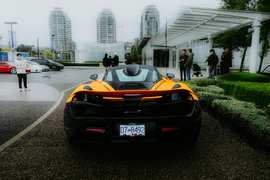
The core of the Testarossa’s powertrain is a potent 4.0-liter twin-turbocharged V8 engine. While Ferrari has a long history of naturally aspirated V12s and traditional V8s, this twin-turbo configuration represents a significant evolution, aimed at reducing emissions while maintaining blistering performance. This powerful ICE (Internal Combustion Engine) is meticulously integrated with three distinct electric motors, creating a synergy that is often difficult to achieve in high-performance applications.
The Electric Architecture
The Testarossa incorporates a sophisticated tri-motor setup. Two electric motors are mounted on the front axle, providing the capability for advanced torque vectoring and enabling full electric-only driving for short distances. These front motors not only contribute to the car’s incredible acceleration but also enhance stability and handling on challenging roads.
A third electric motor is positioned between the V8 engine and the advanced transmission system. This motor serves as an auxiliary drive unit, seamlessly blending power from the electric and ICE components. This complex integration ensures a smooth transition of power, eliminating the lag often associated with hybrid systems and delivering a pure, connected driving experience.
Power Distribution and Transmission
Power is routed to all four wheels through a sophisticated 8-speed dual-clutch automatic transmission (DCT). This transmission is renowned in the automotive world for its lightning-fast shift times and its ability to handle immense torque. In the context of the Testarossa, the DCT works in harmony with the tri-motor setup to deliver instantaneous power delivery, ensuring that every driver input results in immediate acceleration.
The drivetrain architecture is optimized for all-wheel drive (AWD), which is crucial for handling the 1,050 PS (Pferdestärke – metric horsepower) produced by the combined system. The ability to distribute power across all four wheels allows the Testarossa to maintain optimal traction during hard launches and high-speed cornering, providing a level of driver confidence and control that is essential for a car in this segment.
Performance Metrics
Ferrari claims the 849 Testarossa can sprint from 0-100 km/h (0-62 mph) in under 2.3 seconds. This staggering acceleration figure places it at the apex of the performance pyramid, rivaling the fastest supercars available in the U.S. market. Furthermore, the Testarossa is expected to reach a top speed exceeding 330 km/h (approximately 205 mph), positioning it firmly in the ultra-high-performance category.
Design and Aesthetics: A Fusion of Heritage and Modernity
The design of the Ferrari 849 Testarossa is a masterclass in balancing heritage with futuristic ambition. Inspired by the iconic original Testarossa, the new model features a sophisticated, aero-optimized aesthetic that clearly identifies it as a Ferrari while simultaneously pushing the boundaries of modern supercar design.
Exterior Styling
At the front, the Testarossa features distinctive L-shaped LED headlights, connected by a gloss black strip that pays homage to classic Ferrari design cues. This styling element, known as the ‘shark-nose’ look, is a nod to the era of 1980s poster cars, but updated with modern lighting technology. The front bumper incorporates a large central air intake and a pronounced splitter, optimized for aerodynamic downforce and cooling efficiency.
From the side profile, the Testarossa showcases a dramatic, muscular design. Large alloy wheels, sharp body lines, and prominent air intakes channel air towards the mid-mounted engine, emphasizing the car’s performance credentials. The roofline seamlessly flows into the rear section, a design feature that enhances aerodynamics while contributing to the car’s overall elegance.
The rear of the Testarossa is equally dramatic. Slim LED tail lamps, twin tail sections, and high-mounted exhaust outlets create a bold, distinctive look. The large diffuser at the rear works in conjunction with the underbody design to optimize airflow and downforce, providing a stable platform at high speeds.
Interior Design and Driver Focus
The interior of the Testarossa is designed to immerse the driver in the driving experience. Ferrari has opted for a driver-focused cockpit, prioritizing performance information over traditional infotainment. The cabin is dominated by a large 16-inch digital display that provides the driver with all the essential data, from speed and RPM to advanced performance metrics and navigation.
A passenger-side 9-inch screen offers additional data viewing capabilities, allowing passengers to monitor performance and adjust vehicle settings. The center console is positioned high between the seats, creating a cockpit-like environment that enhances the sense of connection between the driver and the machine.
Ferrari has also reintroduced physical steering-wheel buttons, a welcome change for drivers who prefer tactile feedback over touch-sensitive controls. The materials used throughout the cabin are of the highest quality, including premium leather, carbon fiber, and aluminum trim, reflecting the ultra-luxury positioning of the Testarossa.
Technical Specifications and Features
To understand the full value proposition of the Ferrari 849 Testarossa, it is essential to look at the detailed technical specifications and key features that set it apart in the U.S. luxury car market.
Key Specifications
Engine: 4.0-liter twin-turbo V8 + three electric motors
Total Power: 1,050 PS
Transmission: 8-speed dual-clutch automatic (DCT)
Drivetrain: All-wheel drive (AWD)
Electric-Only Range: Short distances (urban mobility)
0-100 km/h (0-62 mph): Under 2.3 seconds
Top Speed: Over 330 km/h (205 mph)
Performance and Efficiency Enhancements
The hybrid system not only boosts power but also enhances efficiency. The Testarossa can travel short distances on pure electric power, reducing emissions and offering a more refined driving experience in urban environments. This flexibility is increasingly important in the U.S. market, where regulatory pressures and environmental consciousness are driving demand for electrified vehicles.
Premium Features and Technology
Despite its track-focused nature, the Testarossa is equipped with a suite of modern technologies that enhance connectivity and convenience.
Infotainment System: Premium audio system with wireless Apple CarPlay and Android Auto integration.
Displays: 16-inch digital driver display and 9-inch passenger display.
Performance Systems: Advanced performance telemetry system.
Interior Materials: Premium leather, carbon fiber, and aluminum trim.
Safety and Performance Systems: Carbon-ceramic brakes, advanced traction control, and multiple stability management systems.
The Competitive Landscape: Rivals in the U.S. Market
The arrival of the Ferrari 849 Testarossa in the United States intensifies