
The Arrival of a Legend: Unpacking the Ferrari 849 Testarossa’s Global Debut
In the world of automotive luxury and performance, certain names evoke an almost mythological status. Few carry the weight of Ferrari, and fewer still possess the cultural resonance of Testarossa. Now, in 2026, Maranello has reignited this legend with the unveiling of the Ferrari 849 Testarossa, a masterpiece of engineering that signals a seismic shift in the high-performance supercar landscape.
For discerning collectors, automotive enthusiasts, and performance car buyers in the United States, the arrival of the 849 Testarossa isn’t just a new car; it’s a defining moment for the industry. This article provides a deep-dive into what makes the 849 Testarossa revolutionary, its technical specifications, design philosophy, and its place in the hypercar hierarchy. We will explore the pricing expectations, the cost implications for buyers, and the strategic considerations for anyone contemplating an investment in the apex of Italian automotive engineering.
A New Era of Ferrari Performance
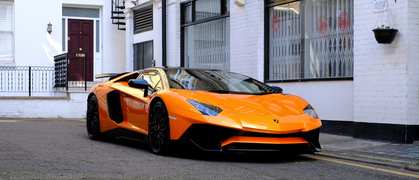
The Ferrari 849 Testarossa replaces the SF90 Stradale as the marque’s flagship series-production supercar. This transition marks a pivotal moment in Ferrari’s evolution, signalling a renewed commitment to boundary-pushing innovation. With the cost of hybrid supercars continuing to escalate, the Testarossa enters the market as a direct challenger to behemoths like the Lamborghini Revuelto, McLaren 750S, and Aston Martin Valhalla.
This isn’t simply an iteration; it’s a paradigm shift. While its predecessor, the original Testarossa, was iconic for its V8 powertrain and bold aesthetics, the 2026 iteration embraces a futuristic design and state-of-the-art plug-in hybrid V8 powertrain, delivering an astonishing 1050 PS (metric horsepower).
Technical Excellence: The Heartbeat of the 849
At the core of the Ferrari 849 Testarossa lies a sophisticated hybrid system engineered to deliver unparalleled performance while maintaining a semblance of efficiency—a necessity in the modern performance car market.
Powertrain Specification: A Symphony of Combustion and Electricity
The engine specifications are nothing short of breathtaking. The 849 Testarossa features a 4-liter twin-turbo V8 engine, a powerhouse in its own right, augmented by three electric motors. This sophisticated plug-in hybrid system forms the backbone of the vehicle’s performance profile.
To understand the engineering marvel, consider the distribution of this power:
Front Axle: Two electric motors are precisely positioned on the front axle. This allows for true all-wheel-drive control, independent torque vectoring, and enhanced handling stability.
Rear Axle: A third electric motor is integrated between the engine and the transmission (gearbox).
Together, these components produce a combined output that pushes the supercar performance benchmarks to new limits.
Drivetrain and Transmission
Power is distributed to all four wheels through an 8-speed dual-clutch automatic transmission (DCT). This Ferrari gearbox is renowned for its rapid shifting speeds and seamless integration with the hybrid system. The use of a dual-clutch automatic ensures that power delivery is fluid, immediate, and optimized for both high-performance driving and potentially lower-speed urban environments via electric-only mode.
Performance Metrics: Staggering Numbers
While Ferrari is often reserved with official figures until the product launch date, whispers from Marangello indicate a 0-60 mph sprint time under 2.3 seconds and a top speed exceeding 330 km/h (approximately 205 mph). These numbers place the Testarossa firmly in the hypercar category, competing directly with the performance of the Lamborghini Revuelto.
Cost Implications for the US Buyer
For US-based buyers, the cost of the Ferrari 849 Testarossa will be a major consideration. While official pricing remains undisclosed, industry analysts estimate the vehicle will retail in the United States in the region of $600,000 to $700,000. This places it at the apex of the high-end car market, competing with other luxury car prices and exotic car financing options.
Design Philosophy: A Blend of Retro Iconography and Future-Forward Aesthetics
The Ferrari 849 Testarossa design is a critical aspect of its appeal. It successfully merges the nostalgic silhouette of the original Testarossa with cutting-edge supercar styling.
Front Fascia: Sharp, Aggressive, and Aerodynamic
The front of the car features distinctive L-shaped LED headlights, connected by a gloss black strip—a clear nod to classic Ferrari design cues. The front bumper incorporates a large central air intake and a pronounced splitter designed to channel air efficiently around the vehicle and enhance aerodynamic performance. This intricate integration of style and function ensures the car not only looks the part but performs at the pinnacle of automotive engineering.
Side Profile: The Iconography of Power
The side profile remains instantly recognizable, yet refined. Large alloy wheels command attention, while the characteristic flying buttresses and prominent air intakes channel air toward the mid-mounted engine. These elements serve a vital purpose beyond aesthetics: managing heat and optimizing airflow for maximum performance.
Rear Design: A Dramatic Finish
The rear design is highlighted by slim LED tail lamps, twin tail sections, high-mounted exhausts, and a large diffuser. This creates a dramatic, aerodynamic finish that underscores the car’s supercar credentials.
Interior Design: A Driver-Centric Cockpit
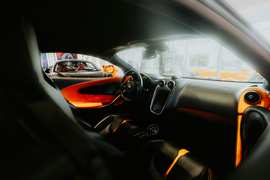
The interior of the Testarossa is designed to feel like a true driver’s cockpit, eschewing the traditional infotainment screen for a heightened focus on the driving experience.
The Driver-Focused Dashboard
Instead of a monolithic center display, Ferrari has implemented a multi-screen setup that prioritizes driving information.
Driver Display: A large 16-inch digital display provides the driver with critical performance data and vehicle information.
Passenger Display: A 9-inch screen offers passengers a similar view, allowing them to track performance metrics and vehicle details.
This digital dashboard design represents a significant shift in Ferrari interior philosophy, emphasizing driver engagement above all else.
Ergonomics and Materials
The centre console is positioned high between the seats, creating a cockpit-like layout that fosters driver confidence and control. In a welcome return to traditional Ferrari ergonomics, the car features physical steering-wheel buttons, replacing the touch-sensitive controls found on some previous models.
The cabin is upholstered with premium materials, including leather, carbon fibre, and aluminium trim, underscoring the luxury automotive positioning of the vehicle.
Features and Technology
Despite its track-focused nature, the Ferrari 849 Testarossa is equipped with a suite of modern technologies designed to enhance both performance and convenience.
Key Technology Highlights
Wireless Apple CarPlay and Android Auto: Essential for modern connectivity, these features are seamlessly integrated into the car’s technology suite.
Premium Audio System: Audiophiles can enjoy a high-end audio experience, complementing the powerful supercar engine.
Performance Telemetry System: A system designed to track and record driving data, essential for serious enthusiasts seeking to optimize their driving performance.
Carbon Fibre Trim: Extensive use of carbon fibre reduces weight and enhances the premium feel of the cabin.
Safety and Performance Systems
The Testarossa incorporates advanced safety features, including:
Carbon-Ceramic Brakes: Essential for stopping power when managing extreme speeds, these brakes reduce fade and improve responsiveness.
Advanced Traction Control: Ferrari’s proprietary systems ensure maximum grip and stability, even under aggressive acceleration and cornering.
Multiple Stability Management Systems: Ensuring the driver remains in control, these systems continuously monitor and adjust the car’s dynamics.
Competitive Landscape: The US Supercar Market
The Ferrari 849 Testarossa enters a hyper-competitive market segment. Its primary rivals in the United States include:
Lamborghini Revuelto: The direct competitor, known for its dramatic styling and equally aggressive performance figures.
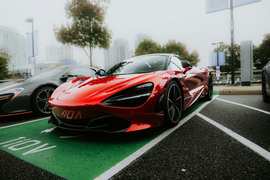
McLaren 750S: A benchmark in lightweight performance, now facing stiff competition from Ferrari’s hybrid system.
Aston Martin Valhalla: Representing the British entry into the hybrid hypercar space, offering a unique blend of performance and luxury.
Among these, the Lamborghini Revuelto is widely anticipated to be the closest competitor in terms of performance, pricing, and supercar appeal. The rivalry between these two iconic brands will undoubtedly shape the supercar landscape for years to come.
What This Means for You: Navigating the 2026 Supercar Market
For buyers in the United States, the arrival of the Ferrari 849 Testarossa presents both opportunities and challenges.
Should You Buy, Wait, or Rent?
If you are a serious collector: The Testarossa represents a chance to own a piece of automotive history. Its unique blend of retro design and cutting-edge technology makes it a potential icon in the making. Given Ferrari’s track record of holding value, this could be