
The Concours Game: Why The Quail Is Facing a Real Challenger in 2026
Let’s be crystal clear from the outset: for anyone who understands what a concours d’elegance actually is—a showcase and judging of automobiles and accessories based primarily on their aesthetic quality, craftsmanship, and condition—the question of which event is “better” is complex. For decades, Pebble Beach has stood as the undisputed pinnacle. But as we traverse the luxury automotive landscape in 2026, a new challenger isn’t just nipping at the heels; it’s attempting to snatch the crown.
For those entrenched in the high-stakes world of blue-chip cars, the comparison usually focuses on the legendary Pebble Beach Concours, which anchors the week-long Monterey Car Week. This week is often described as a decadent spectacle of wealth, rare machinery, and exclusive gatherings, culminating on Sunday with the greatest concours of them all. We’re constantly asked if the Goodwood Festival of Speed still reigns supreme, or what about the Goodwood Revival, Amelia Island, or Moda Miami in 2026? Does Retromobile in Paris still have the magic? And now, with the proliferation of luxury developments and global automotive hubs, where does the Concours at Wynn Las Vegas fit in?
Frankly, no matter where the world’s elite and most passionate collectors gather to admire rare automobiles, the question persists: Is Pebble Beach still the king?
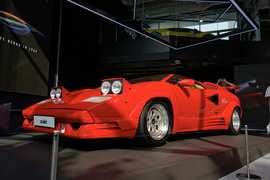
The short answer is yes—Pebble Beach remains the gold standard in automotive history and concours prestige. However, the heir apparent, The Quail, might just have a formidable new competitor.
Why The Quail is Under Pressure
For years, The Quail: A Motorsports Gathering has served as the perfect warm-up to Sunday’s Pebble Beach main event. It operates as a culinary and motoring experience—a highly refined garden party where one can sample champagne, savor crab legs, and peruse automotive excellence. Yet, the landscape has shifted dramatically.
For a distinct and growing segment of the automotive world, The Quail has long since surpassed Pebble’s Sunday spectacle. This demographic includes collectors who are deeply invested in late-model, hyper-exclusive, and cutting-edge supercars. I have lost count of how many friends attend Car Week only to leave early Sunday morning, specifically because they have no interest in vintage machines. The death of the Geneva International Motor Show left a gaping void in the global supercar calendar—a void that The Quail initially filled adeptly.
Consider these examples: The Lamborghini Aventador debuted at Geneva in 2011, and the stratospherically priced Veneno followed in 2013. The Aventador’s successor, the Revuelto, had an online unveiling, but the Temerario (the Huracán replacement) was first seen at The Quail in 2024. The seven-figure Fenomeno also debuted at The Quail in 2025. In 2016, Bugatti revealed the Chiron in Geneva, but the Divo (2018) and Mistral (2022) both made their global debuts at The Quail.
This pattern holds true for dozens of other prestigious brands. In essence, The Quail has evolved into the premier global showcase for these ultra-modern icons of engineering and design.
The Las Vegas Contender: A Tectonic Shift in 2026
Until recently, I felt The Quail’s position in the global automotive hierarchy was secure. Then, I attended the 2026 Las Vegas Concours (Concours at Wynn Las Vegas). To be transparent, I attended the 2025 event as well, and while it was enjoyable, it felt regional, even provincial. The cars were good, but they were the usual suspects. Honestly, if it weren’t for a project I was working on with Czinger, which earned me an invitation, I probably would have skipped the event this year. But, man, am I glad I went.
What truly set the 2026 Las Vegas Concours apart was its sheer scale and the level of manufacturer support—something that has become increasingly difficult to achieve in 2026.
What Exactly Happened in Vegas?
At the 2026 Las Vegas Concours, the Wynn proudly displayed 48 Bugatti Veyrons on the lawn. Yes, you read that correctly. Of the 450 Veyrons ever built and the 100 sold in North America, 48 were present in Las Vegas. Well, technically 49, as Bugatti also brought a stunning white Vitesse Super Sport to mark the Veyron’s 20th anniversary. They also displayed a Bolide, Centodieci, Chiron Super Sport, Divo, Mistral, and a prototype of the upcoming 18-cylinder hybrid Tourbillon. However, congregating more than 10% of all Bugatti Veyrons ever produced in one location is almost incomprehensible, and it has left me rethinking the entire concours landscape.
A Mind-Blowing Display of Modern Hypercars
The kids like Paganis too, right? Well, there were more than 40 of them. I didn’t count exactly (I was too mesmerized by the Veyrons), but there were several Zondas, including a Zonda Revolution (one of five), dozens of Huayras, a slew of Utopias, and—worryingly for The Quail—the debut of the Huayra Codalunga Speedster, a model Pagani intends to produce in just 10 units at a staggering price of $7 million each before taxes and tariffs. (The mint-green prototype under the wraps belongs to Apple CEO Tim Cook.)
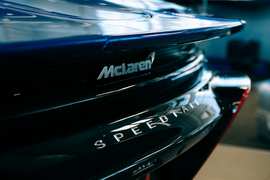
Even if these carbon-titanium extroverts aren’t your thing, the fact that the 2026 Las Vegas Concours was not only the largest Pagani gathering ever held in North America but also the venue where Horatio Pagani (honored on stage by host Justin Bell for his contributions to automotive design) and his team chose to introduce a new model says something profound. More on that shortly. Going back to the 40+ Paganis: that represents a greater number of cars than the factory produces in an entire year.
The Lamborghini section was equally mind-blowing for enthusiasts of such vehicles. First off, the 2026 Wynn Vegas Concours hosted the largest gathering of Lamborghinis ever assembled. Again, I didn’t count, but the number being discussed was around 230. That’s 230 out of the 600 total cars presented that Saturday. Absolutely staggering.
Within that herd, there was a Veneno Coupe (one of three sold to the public; the factory retains a fourth), a Sesto Elemento (one of 10), a Centenario coupe (one of 20) and convertible (one of 20), and a Reventón (one of 21). The last time I saw all these “few-offs” (as Lamborghini now calls them) together in one place was at the factory’s own museum. It was an astonishing assembly of precious, high-horsepower Italian metals and composites.
The Sheer Volume of Exhibitors in Las Vegas
To keep this article manageable, I’m omitting details about the Koenigseggs, the Gumpert Apollo, the Czingers, the Nilu, the debut of the McLaren Project Endurance race car, and even the cars that were officially judged (including a former Pebble Beach Concours-winning 1929 Mercedes-Benz 680 S Barker Tourer 26/120/180 that won Best of Show here). I also haven’t mentioned the HWA EVO, a Mercedes-AMG One, two Oldsmobile Aerotechs, or a McLaren F1. And yes, that is one heck of a car show.
What Could Possibly Be Next?
Two conversations kept dominating the discussions at the 2026 Las Vegas Concours. The first was the inevitable question: “How on earth are they going to top this next year?” I have no idea, but I wish the Wynn the best of luck. The second, and frankly far more intriguing, query came from the OEM car manufacturers themselves: “Should we even bother doing The Quail next year?”
This is a valid question. Perhaps I should extend my best wishes to The Quail as well.
The Financial Reality of Concours 2026
Let’s look at the numbers, because they matter immensely in 2026. Last year, a single ticket to The Quail cost $1,300 (a discounted “legacy” rate). First-time attendees paid $1,600. Yes, those prices are high, but they are reflective of the costs OEMs incur. It costs approximately $400,000 to put a car on a display stand there for six hours.
In contrast, the Las Vegas Concours charges about 1/20th of that amount. For attendees, tickets are $100 each—approximately $2 per Veyron. I spoke with three different automakers who openly questioned the need to ever attend The Quail again. They mused whether Las Vegas and Moda Miami were now sufficient.
The Economic Case for Las Vegas
Beyond the sheer spectacle, the economics heavily favor Las Vegas. For attendees, you avoid the soul-crushing traffic and the heart