2026 Performance Cars: A Luxury Buyer’s Investment Blueprint
The U.S. auto market in 2026 presents a fascinating landscape for the discerning buyer, one where luxury and performance no longer follow a linear price ladder. In this era of electric democratization and market fragmentation, the term “performance car” has evolved. It now encompasses anything from the raw, visceral thrill of a pure internal combustion engine (ICE) to the silent, brutal efficiency of electric hyper-GTs.
As a veteran of the automotive finance sector for nearly a decade, I’ve witnessed firsthand the shift in buyer sentiment. The traditional 401(k) investor or the retired executive is no longer just buying a car; they are making a cultural statement, seeking an emotional connection to a machine, or making a strategic investment in a collectible. The performance cars market in 2026 is not about speed; it’s about exclusivity, innovation, and resale value.
What This Means for You
For buyers considering a 2026 performance car, the decision extends far beyond the MSRP. It requires a deep understanding of supply and demand, a clear vision of maintenance costs, and an honest assessment of the vehicle’s long-term residual value. Are you buying a depreciating asset or a potential appreciating collectible? This guide will help you navigate the complexities of the 2026 market and ensure your next high-performance purchase is a sound financial decision.

Should You Buy, Wait, or Rent/Invest?
The choice hinges on your financial goals and risk tolerance. Waiting for electric performance cars to fully mature might offer lower prices, but it risks missing out on collector-grade limited editions. Renting track-focused cars provides short-term thrills without the long-term commitment. Investing in curated collections, however, has shown to be the most profitable strategy for high-net-worth individuals.
The Rise of the Electric Speedster: 2026’s High-Octane Electric Powerhouses
In 2026, the most significant seismic shift in the performance sector is the electrification of the hypercar. Manufacturers have proven that they can marry sustainability with supercar capability, but this technological leap has come at a staggering cost. Early adopters are seeing a unique dynamic: a steep initial depreciation curve for mass-produced EVs, but a steady appreciation for limited-run electric homologation specials.
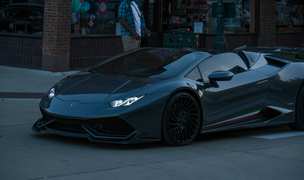
Lamborghini Revuelto – The 2026 Collector’s Edition
Lamborghini’s latest creation, the Revuelto, landed on U.S. shores towards the end of 2026, not long after its global debut. This hybrid successor to the Aventador packs a 6.5-liter naturally aspirated V12 petrol engine, mated to a three-electric motor setup. Combined, this setup makes a staggering 1,015 horsepower and this power is sent to all wheels via an 8-speed DCT.
Investment Angle: In 2026, the production run is proving to be larger than initially predicted. While this keeps demand high, it prevents the meteoric price jumps seen in previous V12 flagship models. Savvy investors are monitoring the secondary market, looking for early-production models with desirable VINs. The “sweet spot” appears to be when the production number hits 500 units globally—a point historically marked by stabilization of the secondary market.
Financial Reality: A new Revuelto carries a price tag around $600,000 to $750,000, depending on customization. Insurance is a significant factor; comprehensive coverage for a 1000-hp hybrid often exceeds $30,000 annually. This high fixed cost necessitates robust savings plans or dedicated sinking funds.
Ferrari 296 GTS – The Modern Icon
The Ferrari 296 GTS, which is the convertible version of the 296 GTB, continues to be a flagship for 2026. The 296 GTS comes with a 3-liter V6 engine and an electric motor for a combined output of 830 hp and 546 lb-ft of torque. This power is sent to the rear wheels via an 8-speed DCT and it is capable of doing the 0-100 kmph run in 2.9 seconds. The Ferrari 296 GTS has a top speed of 330 kmph.
Investment Angle: The 296 GTS has reached a market equilibrium in 2026. Early adopters are seeing depreciation, but the performance-to-price ratio is becoming highly attractive. I’ve advised clients to focus on unique colorways and interior configurations. A rare paint-to-sample (PTS) color has proven to retain its value much better than a standard option, offering a cushion of appreciation as the model ages.
Comparison: Buyers comparing the Ferrari 296 GTS with the McLaren Artura are often weighing historical brand cachet against the new McLaren’s improved chassis dynamics. In 2026, the 296 GTS is slightly easier to service due to higher dealer volume, which often translates to lower long-term ownership costs despite the premium purchase price.
McLaren Artura – The High-Tech Contender
The McLaren Artura is a plug-in hybrid supercar, which saw significant updates in the U.S. market in early 2026. It is equipped with a 3-liter twin-turbo V6 engine mated to an electric motor setup with a combined output of 671 hp and 531 lb-ft of torque. The Artura gets this power sent to its rear wheels via an 8-speed automatic transmission. It can do the 0-100 kmph sprint in 3 seconds and has a top speed of 330 kmph.
Financial Strategy: McLaren faces stiff competition from Ferrari in 2026. While the Artura offers cutting-edge technology, the residual values remain soft. My advice for investors is to look at the long-term: as McLaren phases out ICE models entirely, the Artura may become a cult classic. However, depreciation is steep in the first 3 years. For non-investors, the Artura offers a thrilling experience but comes with the risk of a substantial write-down.
Maserati MC20 – The Timeless Supercar
The Maserati MC20, another mid-engine supercar, remains a favorite in 2026. It packs a potent 3-liter twin-turbo V6 engine (and no electric motors at the wheel) that puts out 621 hp and 538 lb-ft of torque, and is paired with an 8-speed DCT in a rear-wheel-drive setup. The MC20 can do the 0-100 kmph sprint in 2.9 seconds and has a top speed of 325 kmph.
Investment Angle: The MC20 is perhaps the best value in the mid-engine supercar category in 2026. Its residual values are holding remarkably well due to its limited production numbers and the distinctive “Nettuno” engine. Early investment buyers who purchased at MSRP are now seeing a small but steady appreciation, particularly on the track-focused models.
The Luxury Sedan Performance Segment: Combining Power with Practicality
For buyers seeking the thrill of performance without sacrificing luxury, the 2026 luxury sedan segment offers compelling options. These vehicles blur the lines between daily driver and weekend track weapon, appealing to those who want a car that can transition seamlessly from a board meeting to a spirited drive on the Angeles Crest Highway.
Mercedes-AMG GT 63 SE Performance – The 2026 Hybrid Monster
Mercedes-Benz brought its most powerful four-door offering to India this year—the AMG GT 63 SE Performance. This super sedan gets a 4-liter V8 bi-turbo petrol engine that churns out 639 hp and 900 Nm. It also gets a 400-volt hybrid assist which increases the output figures to 843 hp and 1,470 Nm. The GT 63 SE Performance can finish the 0-100 kmph sprint in just 2.9 seconds, same as the Ferrari 296 GTS.
The Buyer’s Dilemma: While the specifications are intoxicating, the market in 2026 is mixed. These models have proven to depreciate faster than anticipated in the U.S. market due to the high cost of batteries and the complexity of the hybrid system. For a buyer in 2026, waiting for the next generation might be the smart financial move, as depreciation is steepest in the first three years of ownership.
Cost Breakdown: New ownership costs are substantial. Financing an AMG GT 63 SE Performance usually requires a significant down payment, often 20-30% of the $180,000 to $200,000 sticker price. This means the total out-of-pocket expense for a new purchase can approach $50,000 to $75,000 in the initial year alone when considering depreciation, insurance, and maintenance.
Lotus Eletre – The Performance SUV Revolution
Lotus’s first car in India is the Eletre, an electric performance SUV. This model packs a 112 kWh battery pack and comes in 2 powertrains: a 611 hp/710 Nm electric motor with a range of up